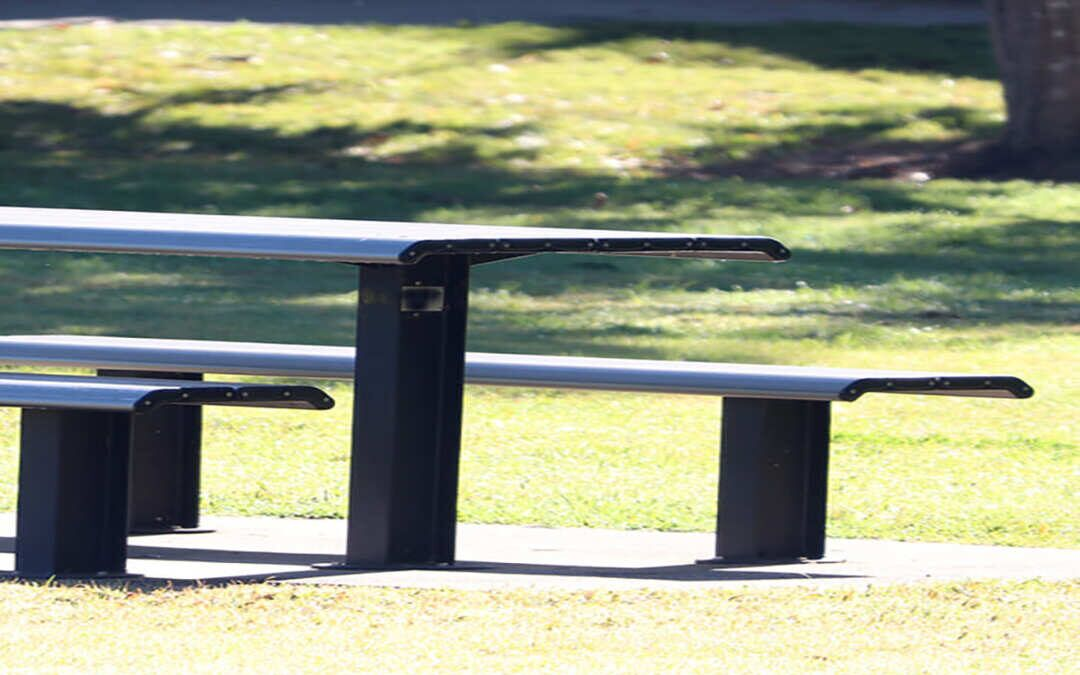

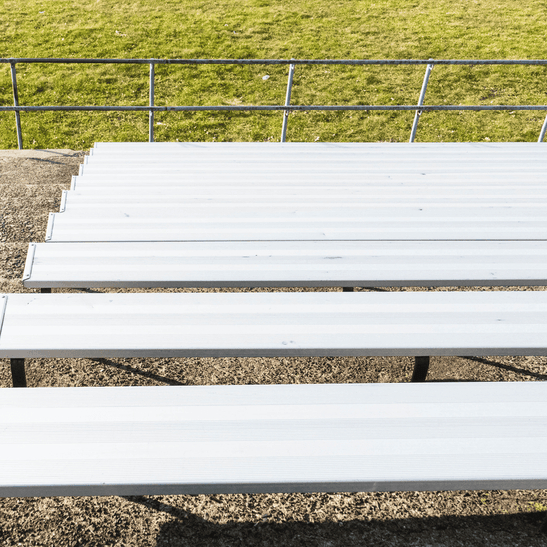
The finish on an aluminium outdoor bench seat affects how it handles sun, scuffs, installation and cleaning over its working life. Most buyers still choose it from a colour swatch and a price column, and the consequences show up a few summers later.
By then, the only cheap fix is a better spec on the next order.
Four Finish Types and What Separates Them
Aluminium benches typically come in mill finish, anodised, powder coated or wood look powder coated. They differ mainly in how thick the protective layer is and where it sits.
- Mill finish, often listed as “natural”, is bare aluminium with nothing but its thin natural oxide skin for protection.
- Anodising is an electrochemical process that thickens that oxide skin into a hard, sealed film. It becomes part of the metal, so there’s nothing to peel or flake.
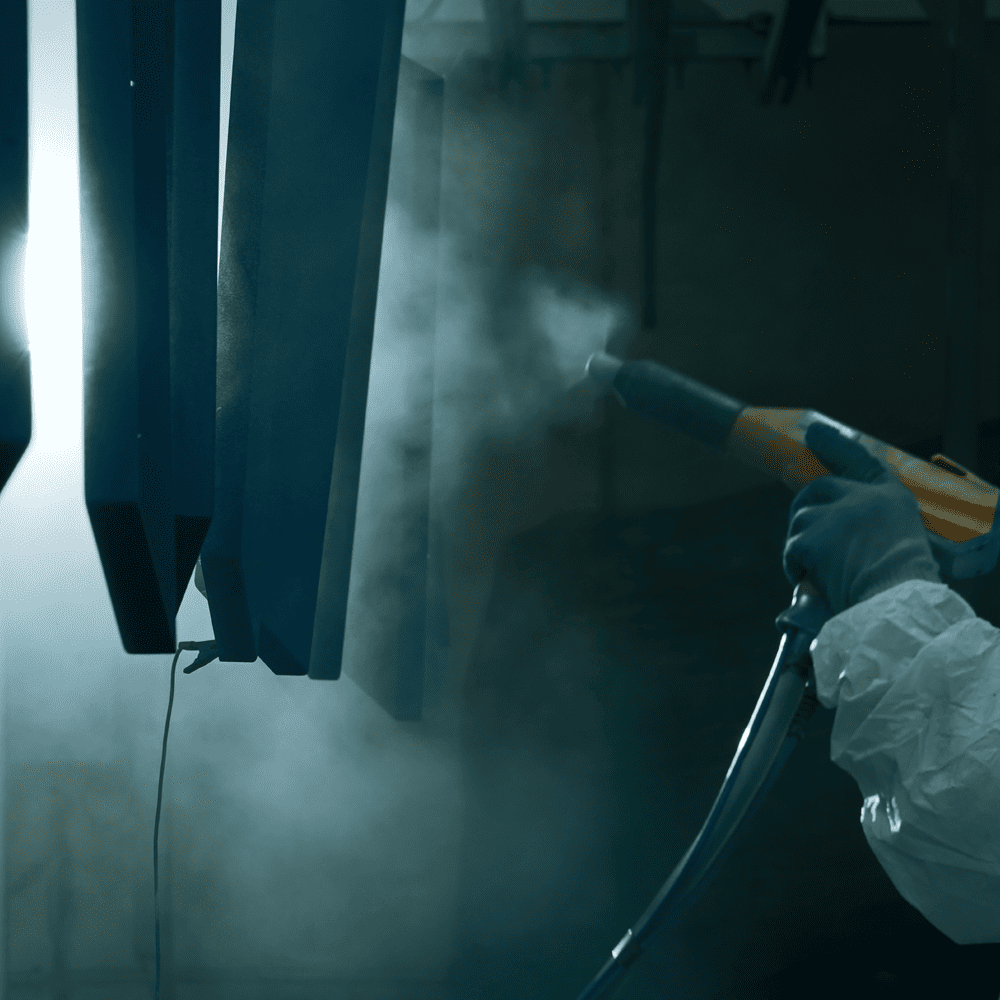
- Standard powder coat is a polymer powder sprayed on and baked into a separate film, usually around 60 to 80 microns thick.
- Wood look powder coat carries a timber-grain pattern within the coating, and there’s no oiling schedule to keep up.
Coloured anodising does exist, though the palette is narrow and differs between suppliers. Some bench ranges list a single anodised option with no colour choice at all. Bronze or black anodising needs confirming with the supplier before it goes into a spec.
Most differences in wear and repair come down to that protective layer and how it fails.
How the Finish Affects Seat Temperature
Dark finishes run noticeably hotter in direct sun than clear anodised or pale colours, though shade and colour choice matter more than finish type. A charcoal outdoor bench seat in full summer sun can get uncomfortable enough that people stand instead.
- Clear anodised and pale powder colours stay noticeably cooler than charcoal or black.
- A dark timber-grain pattern is still a dark coating, so it absorbs heat like any deep colour.
- Aluminium conducts heat well, so a sun-baked seat transfers that warmth to skin quickly.
- An unshaded, west-facing position cops the worst of the afternoon sun regardless of finish.
Near playgrounds and on school grounds, seat heat becomes a duty of care issue. That makes a dark colour in an unshaded spot hard to justify, however good it looks on the swatch.
How the Finish Changes Fabrication Details
Anodising reveals the metal underneath, so weld quality and surface marks are easier to see on an anodised bench than a powder coated one. That makes finish choice something to settle before fabrication starts, since it changes how the job is approached.
Weld filler is the obvious example. Grade 4043 filler commonly anodises to a dark grey, while 5356 filler sits closer to the parent metal’s colour. On a seat with exposed welds at every leg joint, that colour difference is easy to spot.
Powder coat is more forgiving. A ground-back weld vanishes under a solid colour. The trade-off is coverage, since powder struggles to reach deep inside corners and tight perforations, which coaters call the Faraday cage effect.
Any cutting or drilling done after finishing leaves raw metal exposed.
How Installation Affects the Finish
Most finish failures on aluminium benches trace back to installation and cleaning habits, and installation errors usually show up at the footing line first. The usual culprits are:
- Anodised legs set into concrete without masking, which leaves a permanent etched band where the alkaline slurry touched.
- Footings finished flat around powder coated legs, so rainwater and lime sit against the coating.
- Holes drilled on site and left unsealed, with no finish inside them at all.
- Stainless bolts sitting directly against aluminium with no nylon or EPDM washer between them, which invites galvanic corrosion.
Masking tape and isolation washers cost next to nothing, which makes their absence all the more frustrating. Where installation goes to a separate contractor, both tend to get missed unless they’re written into the scope. Photos of the footings at handover also give a record if a finish warranty claim comes up later.
Frequently Asked Questions
Does Mill Finish Aluminium Need a Coating Outdoors?
Bare aluminium can’t rust, since rust is iron oxide. It still marks easily and dulls unevenly over time, particularly near salt water. Most public seating is anodised or powder coated to keep it looking presentable.
Which Finish Holds Up Better Near the Coast?
Anodising at AA25 is the usual recommendation where salt spray regularly reaches the seats. Powder coat needs a marine-rated system to cope there, plus a wash routine that’s genuinely kept up. Salt speeds up corrosion under any chip, so poorly maintained powder coat fails first.
Can an Anodised Bench Be Powder Coated Later?
It can, but the sealed anodic layer resists powder adhesion. Coaters generally strip the anodising or apply a specific pretreatment first. That makes it a refurbishment job, so choosing the right finish upfront is cheaper.
Key Takeaways
The finish affects an aluminium outdoor bench seat’s heat, wear, fabrication detail and upkeep, so it deserves a place in the spec from the start.
- Pale and clear finishes run cooler, though shade and colour matter more than finish type.
- Anodising exposes welds and surface marks, so finish choice belongs early in fabrication planning.
- Most finish failures trace back to installation and cleaning habits.
- Powder coat warranties depend on a washing schedule that somebody actually owns.
- A proper spec cites the Australian Standard and the exact grade required.