
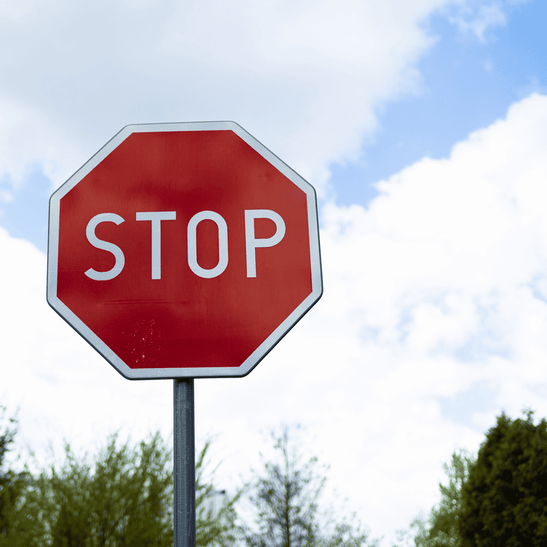
WA traffic signs on a public road and in a private car park often look identical. The legal footing behind them is completely different. On a public road, a road authority approves the regulatory sign, and police or council rangers enforce it. On private land, the same sign starts out as the owner’s instruction and only gains legal teeth through separate arrangements.
A regulatory sign tells drivers what they must or mustn’t do, such as stop, give way, speed limit and parking signs. Warning signs only flag a hazard, and the law treats the two groups differently. Most of the gap between private and public WA traffic signs sits in the regulatory group.
Who Signs Off on a Sign Before It Goes Up
Every regulatory sign on a WA public road needs road authority approval, and most private signs need none. The Commissioner of Main Roads controls regulatory signage statewide, including every speed zone on state and local roads. Councils work under delegated authority, which is narrower than most people assume. The split in practice runs roughly like this:
- A council can ask for a lower speed limit on a local road, but Main Roads WA assesses and approves any change.
- Metropolitan councils generally don’t hold standing authorisation for traffic sign works beyond parking controls.
- Rural councils can generally install non-regulatory signs and parking signs on local roads.
- A private owner can put up a stop sign or a 10 km/h sign without road authority approval.
Two kinds of private signs come with set requirements. Towing signs have to meet Department of Transport requirements, and ACROD bays have to comply with their own state regulations. Neither goes through road authority approval, though both limit what an owner can install.
Design Freedom on Private Land Comes with Risk
Private owners can design and word their own signs, and that freedom is where most private sign problems start. Public road authorities work from fixed, coded designs. Drivers read signs by habit, so an unfamiliar sign gives a driver room to argue they weren’t properly informed. The faults that turn up most on private sites include:
- “No Parking” used where the owner means “No Stopping”, which leaves drivers free to pull up briefly for drop-offs.
- Home-made wording like “Visitors Only Please” with no time limit or stated consequence.
- Council-enforced signs missing the agreement number or local law reference.
- Signs at only one entry of a multi-entry car park, so drivers using the other entries never see them.
- Plates mounted behind landscaping that’s grown since the signs went in.
Towing signs leave owners less design freedom than they expect. Requirements broadly depend on property type and bay numbers. Business sites with 50 or more bays are grouped with commercial car parks. Where a major sign is required, it must be at least 60 cm wide and 90 cm high.
Night Visibility and Upkeep
On private land, upkeep sits entirely with the owner, including keeping signs readable at night. Public road signs are maintained by whichever road authority is responsible for them. On workplace sites, sign upkeep forms part of the broader duty to manage traffic risks.
Reflective film is where private sites most often cut corners. The common line in the trade is that anything read at night needs Class 1 film or better. A plain non-reflective sign can look fine on a daytime site walk and fade into the background under headlights.
Fading causes a different headache. A sign that’s lost its colour is hard to defend after an incident. Dated photos are often the only record a site has of a sign’s condition.
Frequently Asked Questions
Can Police Fine Drivers for Speeding in a Private Car Park?
Police generally can’t fine drivers for breaking a speed limit a private owner has set, because it isn’t an approved Main Roads WA speed zone. Some road rules can still apply to driving behaviour in areas open to the public. Closed sites generally rely on site rules and access conditions instead.
Do Private Parking Signs Need Council Approval in WA?
Private parking signs generally need council approval only when the owner wants council rangers to enforce them. In that case, the council approves the wording as part of a parking agreement. Without an agreement, the signs can still go up, though rangers have no power to enforce them.
Can a Business Use Public Road Sign Designs on Private Property?
Businesses can use standard public road sign designs on private property, and it’s generally the safest choice. Standard designs match what drivers expect and what insurers check against. Using a public design doesn’t give the owner any power to fine.
Key Takeaways
Public WA traffic signs get their legal force from the road authority that approves them, and private signs only gain it through separate arrangements. Most of the practical gaps between the two follow from that one point:
- Main Roads WA approves every speed zone in the state, and councils mostly handle parking signs under delegated authority.
- A private sign carries no penalty until a council agreement, a towing arrangement or strata by-laws sit behind it.
- Australian Standards are the default benchmark for private signs, even where compliance isn’t strictly mandatory.
- Towing signs and ACROD bays carry specific state requirements that limit what owners can design for themselves.
- Upkeep on private land sits with the owner, and faded or non-reflective signs are hard to defend after an incident.