

Australia’s industry capacity is running out faster than most planning cycles can register. Trade and technical roles have sat on national shortage lists for years, and several newer pressures are now landing on top of that.
For most businesses, the gap shows up quietly at first. A tender gets passed on, or a roster runs a bit thin. By the time it reaches a board report, the capacity problem has usually been building for a while.
What Industry Capacity Actually Means in Practice
Industry capacity is the amount of committed work a sector can deliver with the workforce and systems it has on hand. It’s a delivery measure, and it can look quite different to headcount.
A business can be fully staffed on paper and still fall behind. That happens when the skill mix doesn’t match the work in front of it. A site with plenty of labourers and no leading hand is a common example.
The gaps usually sit in licensed, ticketed or supervisory roles that take years to develop. Those are also the roles that can’t be filled quickly with a better job ad.
Why the Squeeze Is Accelerating Now
The squeeze is accelerating because long-running workforce shortfalls are now colliding with national targets that fall due around the same time. Several separate pressures are stacking up on one labour pool:
- An ageing trade and technical workforce is retiring faster than apprenticeships can replace it.
- Borders reopened after the pandemic, but migration settings tightened again from 2024. Local training hasn’t made up the difference.
- The National Housing Accord targets 1.2 million new homes over five years from mid-2024, or roughly 240,000 a year. Completions have generally tracked below that pace.
- The legislated 43 per cent emissions cut by 2030 is driving a large build-out of generation and transmission. National system planning has pointed to around 10,000 km of new transmission lines by 2050.
- Residential aged care has had mandated care minutes since October 2023. The sector average rose to 215 minutes per resident per day in October 2024, including 44 from a registered nurse.
None of these targets slides back just because labour is tight. That’s the bit plenty of boards haven’t priced in.
With all of them running in parallel, there’s very little slack left for any single sector to absorb a bad quarter.
The Same Workers Are Being Counted Twice
Many workforce plans quietly assume access to licensed trades that competing sectors are also counting on. The roles most often double-counted tend to be the slowest to replace:
- Licensed electrical workers, who typically need around four years of apprenticeship before holding a licence in their own right.
- Civil operators and plant crews, shared between housing estates and transport upgrades.
- Site supervisors and leading hands, since it takes years of site time before anyone’s trusted with sequencing.
- Estimators and schedulers, a small group that most sectors need and that takes years to build up.
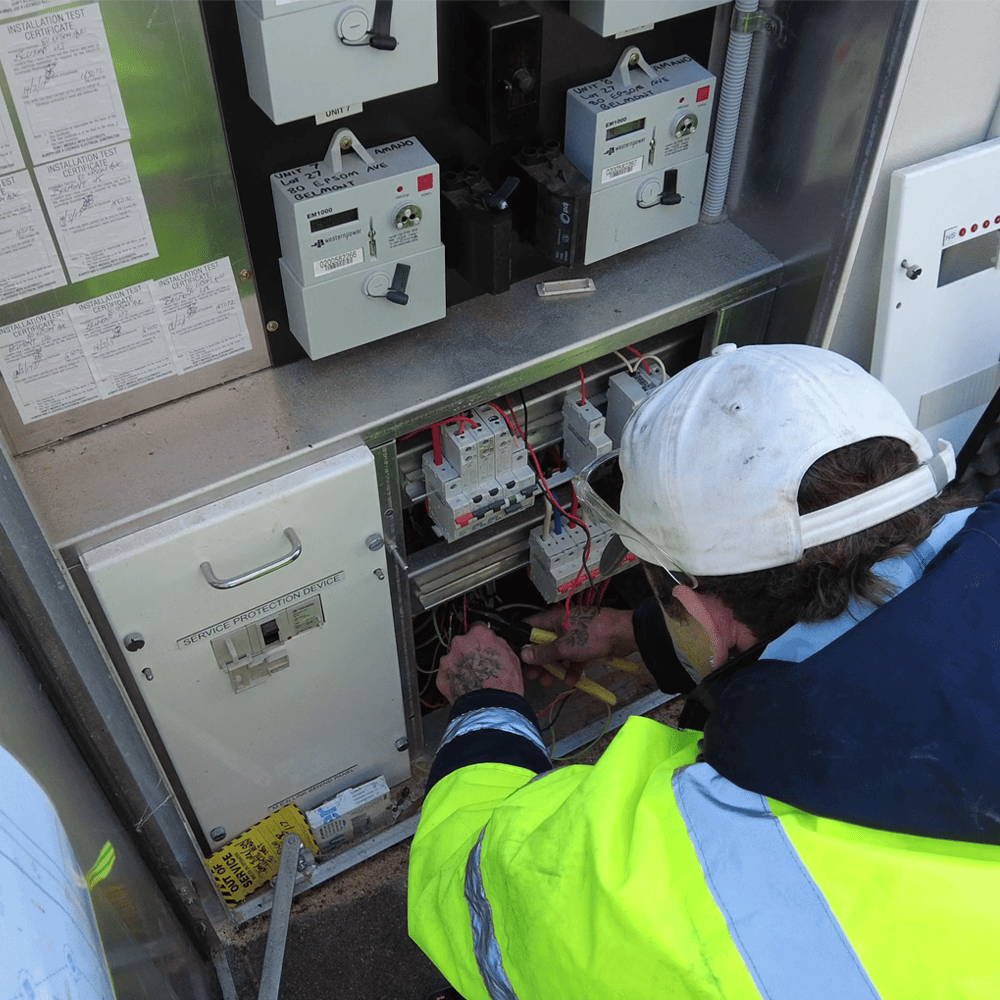
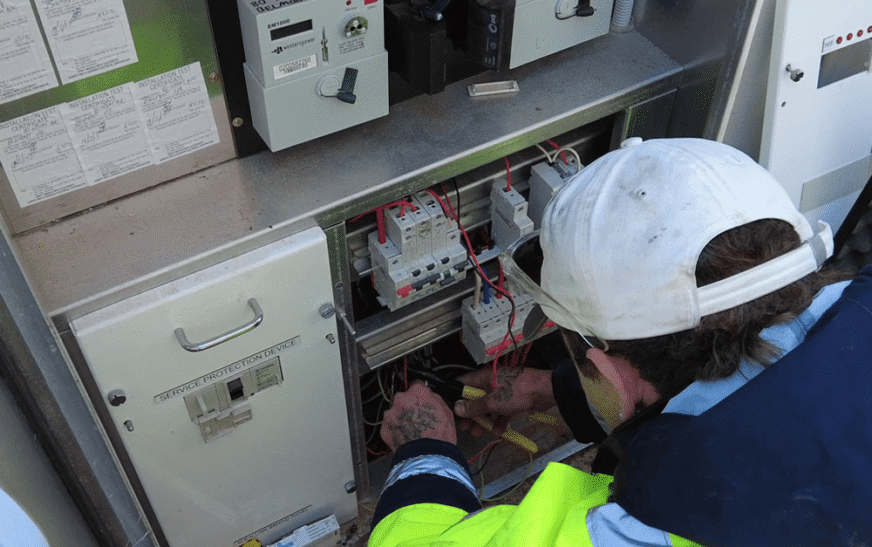
An industrial electrician can wire a substation or a hospital wing just as easily as a high-rise. Each project has its own resourcing plan, and each one assumes that electrician turns up.
Workforce plans are usually built project by project, which is why the overlap goes unnoticed. Nobody’s job is to add up every plan chasing the same regional workers.
Competition for these people pushes subcontractor rates up without adding a single extra worker.
Regional jobs tend to come off second best. A remote wind farm is competing with city projects that don’t ask anyone to live in a donga for six weeks.
Why Back-Office Gaps Hurt More Than They Look
Back-office gaps hurt because they cap the output of frontline workers who are already in place. The knock-on effects usually follow a familiar pattern:
- A delayed take-off pushes a tender past its close date, so the work never gets won.
- Procurement lag leaves a crew on site waiting on materials that weren’t ordered in time.
- Rostering errors in care settings leave shifts uncovered, with agency invoices to follow.
- Late progress claims squeeze cash flow on projects that are otherwise tracking fine.
These roles rarely appear on a shortage list, so they’re easy to overlook in workforce planning. When one goes unfilled, project managers and senior staff tend to absorb the work on top of their own.
A common scenario is a mid-sized builder with three live sites whose only estimator resigns in March. Current jobs carry on, though tendering slows right down. Months later, the following year’s pipeline is noticeably thinner.
Frequently Asked Questions
Is Australia’s Skills Shortage Likely to Ease Soon?
There’s little sign of a quick fix. Licensed trade apprenticeships typically run around four years, and the major national targets extend to 2030 and beyond. An ageing workforce also means retirements will keep drawing experienced people out of the trades.
Which Industries Are Most Exposed to Capacity Shortfalls?
Construction and energy carry the heaviest exposure right now, with care services alongside them. They rely on licensed and regulated roles that are slow to train and need someone physically present. Logistics and technology also feel it, usually in more specialised pockets.
Why Does a Capacity Gap Cost More Than a Normal Vacancy?
A vacancy has a visible cost in overtime or agency rates. A capacity gap also removes work the business would otherwise have won or delivered. That lost revenue rarely shows up in the same quarter, so it’s often missed.
Key Takeaways
Australia’s capacity problem is getting worse because an ageing, stretched workforce is now carrying several national programs at once. The gap tends to appear in back-office and regulated roles before it reaches the frontline. Its cost usually lands later, often as a thinner pipeline or a compliance issue.