
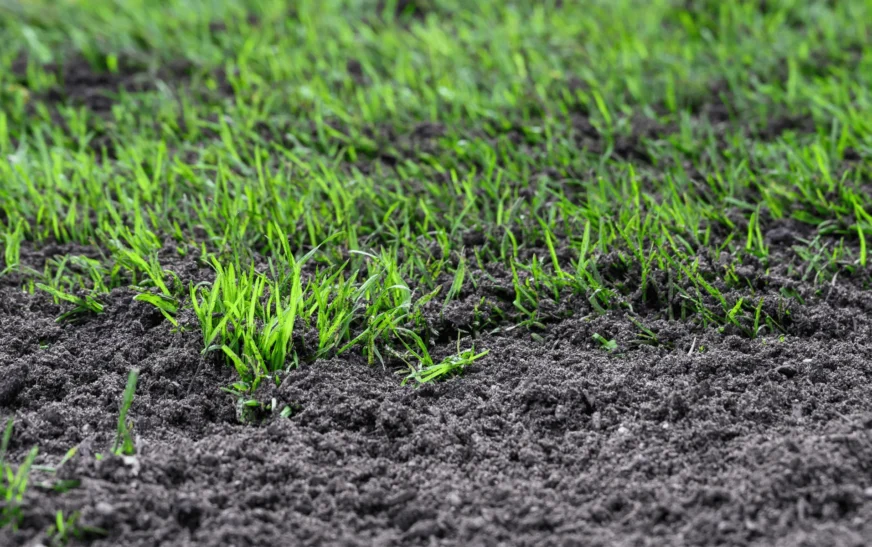
Soil is the hidden system that decides whether your lawn thrives or struggles. Grass health, colour, resilience and water use all trace back to what is happening below the surface. Understand the type of soil you have, how it holds water and nutrients, and how it changes through the seasons. Do that and you can make smarter choices about mowing, watering and other Spring lawn care practices.
Why Soil Texture Matters
Soil texture refers to the mix of sand, silt and clay. Texture sets the rules for drainage, compaction risk and how often you need to water or fertilise.
- Sandy soils drain fast and warm quickly. They are easy to work but lose moisture and nutrients between waterings. Lawns on sand often need lighter, more frequent feeding and wetting agents to keep water in the root zone.
- Loam soils balance drainage and nutrient holding. They are forgiving and suit most turf varieties, making routine maintenance simpler.
- Clay soils hold water and nutrients well but drain slowly and compact under foot traffic. They need careful watering, aeration and organic matter to open the structure.
If you are unsure of your texture, do a simple jar test at home. Shake soil with water and let it settle into layers. Even a rough read gives you enough to adjust your plan.
Structure, Compaction and Root Depth
Structure is how soil particles clump into aggregates. Good structure allows air and water to move freely. Poor structure shows up as hard, crusted surfaces, shallow roots and patchy colour.
- Foot traffic, heavy equipment and frequent mowing when wet lead to compaction.
- Clay is more prone to compaction than sand, but all soils compact if abused.
- Compacted layers stop roots from exploring deeper, which lifts water use and stress in dry spells.
To fix structure, combine mechanical action with amendments:
- Core aeration to punch holes through tight layers.
- Topdressing with compost or a quality organic blend to feed soil life and improve aggregation.
- Calcium sources where appropriate to help clay crumbs form, guided by a soil test.
pH Controls Nutrient Access

Soil pH sets the availability of nutrients. Most lawn grasses prefer slightly acidic to neutral pH. When pH is off, iron, phosphorus and other key nutrients lock up, and colour suffers.
- If your lawn looks yellow despite feeding, pH could be the culprit.
- Acidic soils may need lime to lift pH over time.
- Alkaline soils may respond to elemental sulphur or acidifying fertilisers as part of a longer program.
Always test before adding pH adjusters. Small, consistent changes are safer than big swings.
CEC, Salinity and Sodicity in Plain English
There are three soil terms that sound technical but pay off when you get the idea.
- Cation Exchange Capacity, or CEC, is the soil’s ability to hold nutrient ions. Sands have low CEC, so they leak nutrients faster. Clays and organic matter have higher CEC and hold onto fertiliser longer.
- Salinity is soluble salts in the root zone. It shows up as tip burn, poor germination and stubborn dry patches. Salinity builds in areas with low rainfall, high evaporation or poor quality irrigation water.
- Sodicity is excess sodium on clay particles that causes dispersion. Soil seals, drainage slows and roots suffocate.
If you have salinity or sodicity risk, improve drainage, leach with good quality water when possible, and apply gypsum for sodic clays. A lab test confirms which issue you have.
Organic Matter and the Soil Food Web
Organic matter is the engine room of soil. It increases water holding in sand, opens heavy clay, feeds microbes and stabilises nutrients. The soil food web, from bacteria to earthworms, does quiet work that shows up as better structure and healthier grass.
Practical ways to lift organic matter:
- Return clippings where thatch is under control.
- Topdress with screened compost in thin layers after aeration.
- Use a balanced program that includes slow release or organic fertilisers, not only quick hits.
Drainage, Wetting Agents and Hydrophobic Soil
Australian summers and coastal sands often cause hydrophobic soil. Water beads and runs off rather than soaking in. You see dry patches that resist rewetting and uneven colour after rain.
- Break the water repellence with a quality wetting agent.
- Water in with a long, slow soak to reach the root zone.
- Follow with topdressing to build organic carbon and reduce future repellence.
On clay, the challenge is slow drainage. Combine core aeration with gypsum where tests support it, and use sand or sandy loam in topdressing mixes to create lasting pore space.
Matching Grass Choice to Soil
Choosing turf that suits your soil reduces work long term.
- Sandy, low fertility soils suit drought tolerant types like couch or certain buffalo cultivars that handle lean conditions and recover quickly.
- Heavier loams and clays can support buffalo and kikuyu, which push strong roots and handle wear, provided drainage and compaction are managed.
- Shaded, wetter spots may need shade tolerant buffalo, along with pruning and improved air flow.
If you are renovating, look at the soil first, then pick turf that works with it rather than fighting it.
Watering Based on Soil Behaviour

Watering should follow soil behaviour, not the calendar. The same litre applied to sand and clay behaves very differently.
- On sand, water more often with moderate volumes so roots do not sit dry between cycles.
- On clay, water less often but deeper to avoid suffocating roots.
- Use a screwdriver test. If it resists at 50 to 100 mm, you are dry. If it glides through and soil smears, you are already wet enough.
Smart controllers and simple rain gauges help, but your own checks matter. Strong roots come from allowing the surface to dry slightly between deep waterings.
Fertilising With Texture and CEC in Mind
Feeding should match how your soil holds nutrients.
- Sandy, low CEC soils respond best to smaller, more frequent applications. Blend slow release with organic sources so less leaches away.
- Loams accept standard seasonal programs.
- Clays with higher CEC can handle slightly larger, less frequent applications, but compaction still needs attention.
Always sweep any fertiliser off hard surfaces and water in. This protects waterways and gets the product to the roots where it belongs.
Mowing, Thatch and Soil Air
Mowing height and frequency influence soil health. Cutting too low on stressed soil weakens roots and exposes the surface, which worsens hydrophobic behaviour and compaction.
- Keep blades sharp to avoid tearing.
- Adjust height with the season and variety. Buffalo prefers a little more leaf, while couch can be kept shorter when healthy.
- If thatch builds, consider verticutting or scarifying, followed by topdressing and a balanced feed to help recovery.
All of these practices improve light, air and water exchange at the soil surface.
Final Takeaway
Soil decides how your lawn uses water, fertiliser and sunlight. When you match your mowing, irrigation and nutrition to texture, structure and pH, everything becomes easier. Start with observation and simple tests, then build a routine that blends aeration, topdressing, wetting agents and measured feeding.
Use spring lawn care as your launch point, and keep tuning as you learn how your soil behaves. The result is a greener lawn that wastes less water, needs fewer rescue jobs and stays resilient through Australia’s changeable seasons.