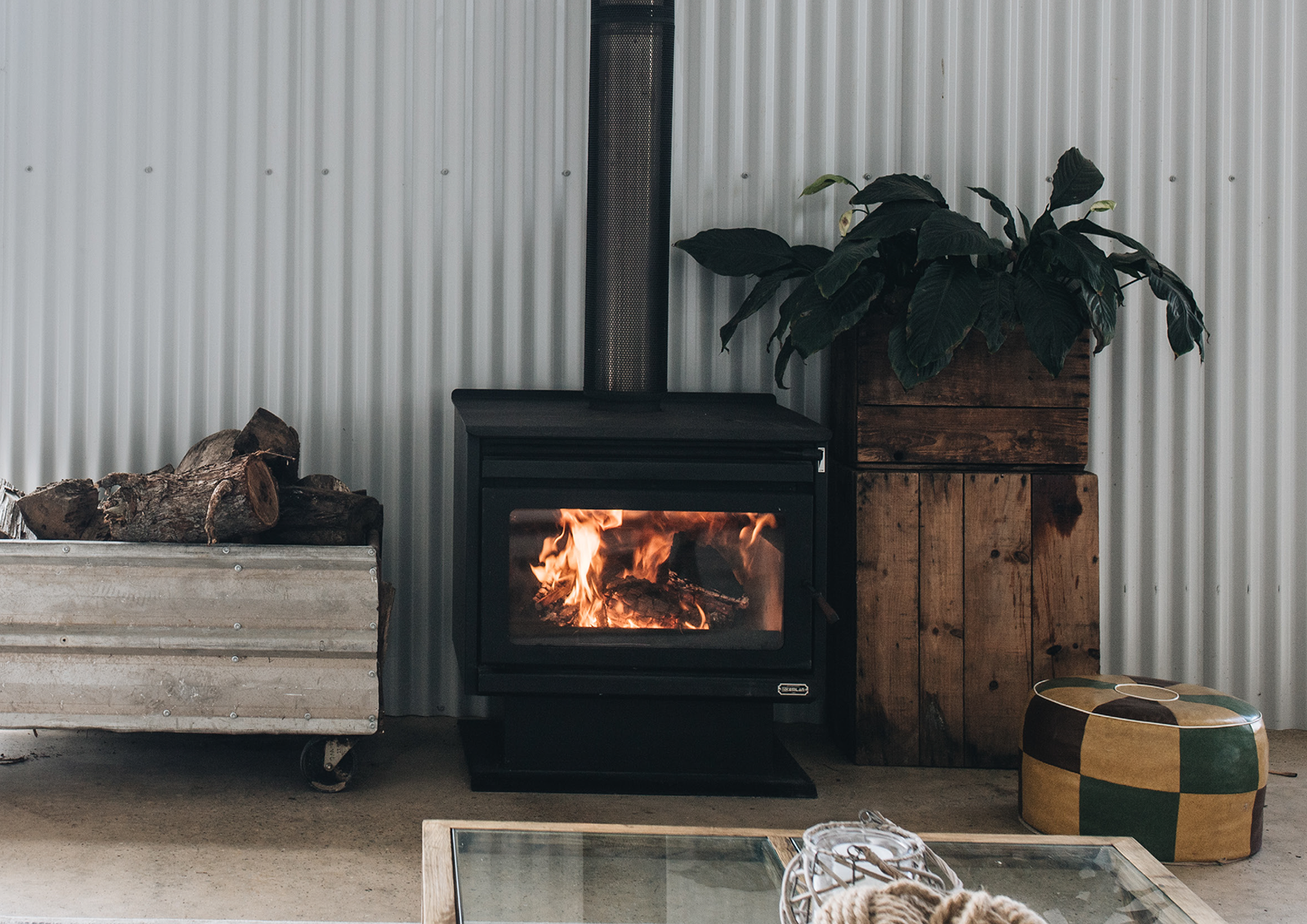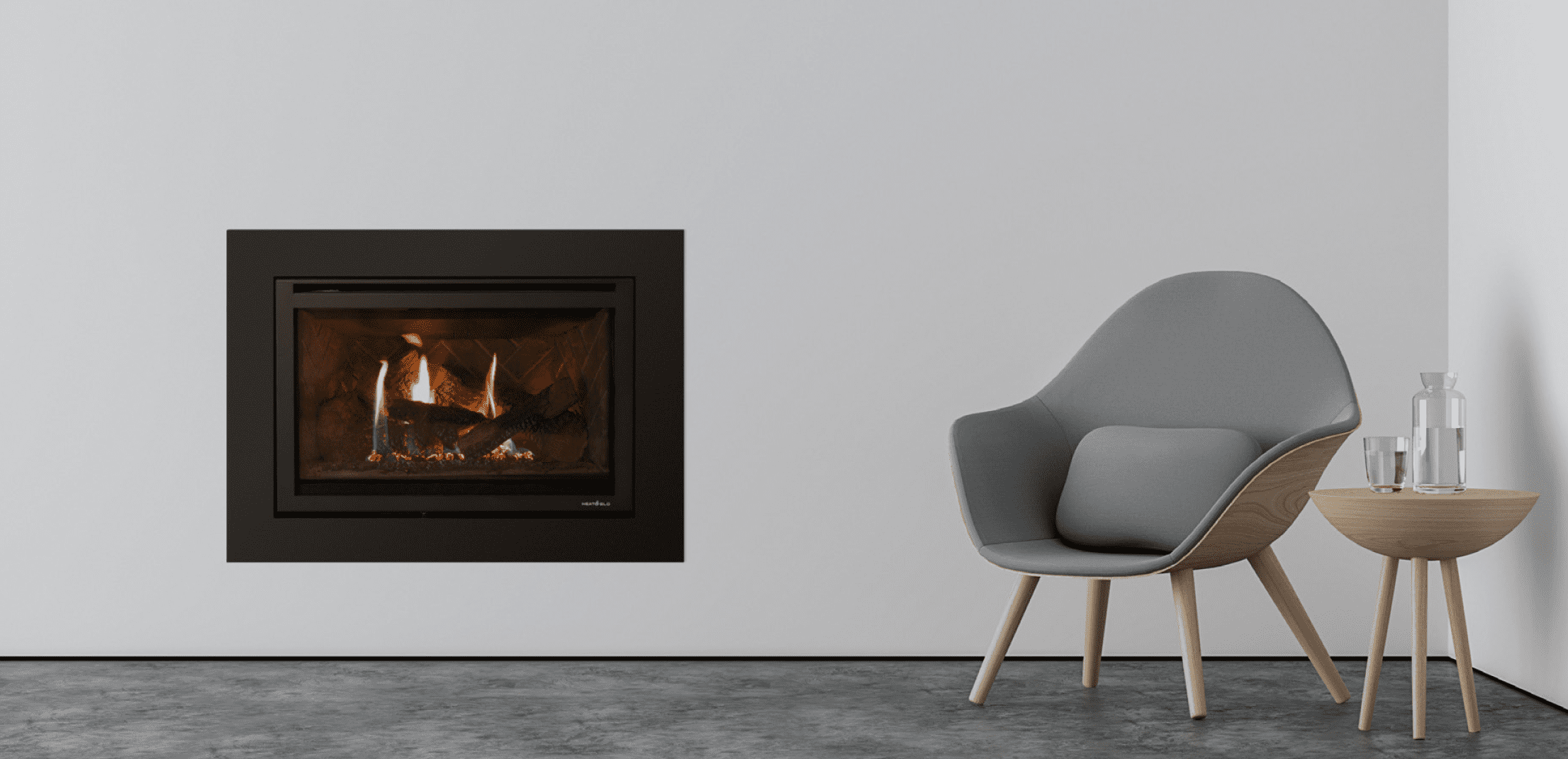
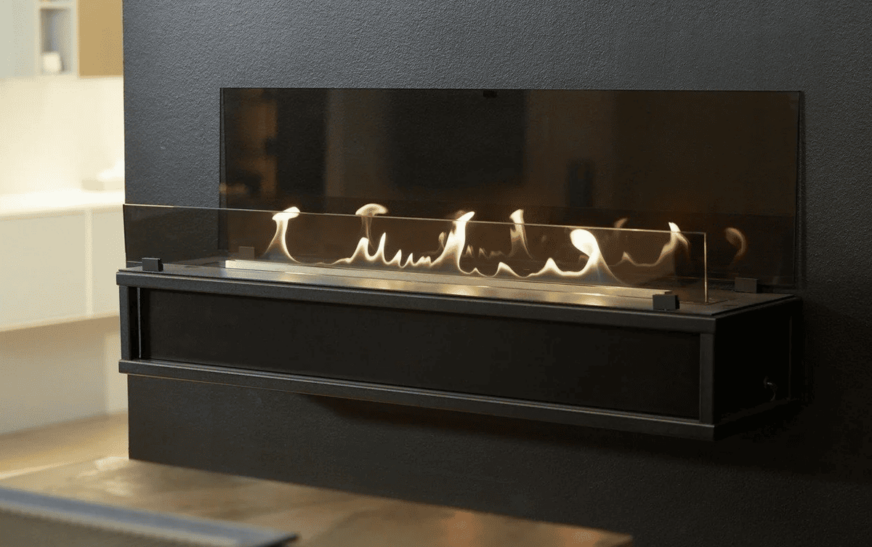
A bioethanol fireplace is a ventless fireplace that burns liquid ethanol fuel (usually sold as fireplace-grade bioethanol) to produce a real flame. Instead of burning wood or using mains gas, it relies on a dedicated burner designed to hold and regulate the fuel as it burns. Because there’s no flue, the unit is engineered to burn cleanly enough for indoor use when it’s the right model for the space and it’s operated correctly.
It helps to think of bioethanol fireplaces as a distinct category rather than a direct substitute for a wood heater. They are typically used for ambience and supplementary heat, with a cleaner setup and more placement flexibility than traditional fireplaces.
What Bioethanol Fuel Is, in Practical Terms
Bioethanol fuel is a liquid alcohol-based fuel intended for clean combustion in purpose-built burners. For most buyers, the practical takeaway is that you should only use fuel that’s specifically made for fireplaces, because consistency and burn behaviour depend heavily on formulation.
Fuel quality affects flame stability, burn time, odour, and residue. If someone has a bad experience with smell or soot marks, the fuel is often part of the story, along with airflow and burner condition.
A few grounded rules of thumb keep things simple:
- Use fireplace-grade bioethanol only, never general-purpose alcohol products
- Store fuel sealed, upright, and away from heat sources
- Keep fuel containers well away from the fireplace during operation
- Expect small variations in flame behaviour between fuel brands and batches
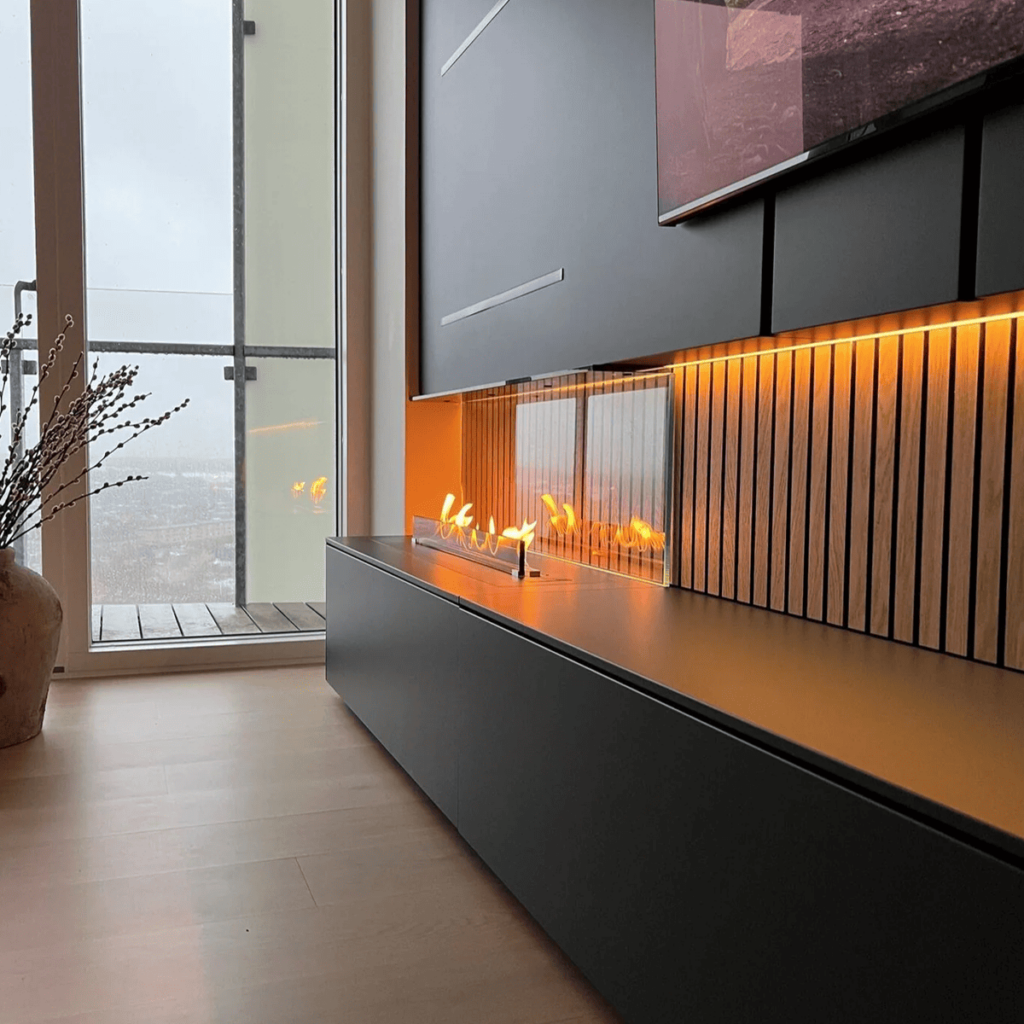
How the Flame Is Produced Without a Chimney
The core mechanism is straightforward: liquid fuel sits inside the burner, a controlled amount of fuel vapour forms at the top opening, and that vapour ignites to create a stable flame. The burner’s geometry and flame control system manage how quickly vapour is released and how intense the flame becomes.
Because the flame sits at the burner opening, the burner design is more important than most people expect. Two units can look similar in photos, yet perform very differently due to internal construction, heat management, and the way the flame is regulated.
The Main Components You’ll See
Most units share the same functional building blocks, even if the exterior style varies from minimalist to traditional. Knowing what these parts do makes it easier to compare models and avoid buying a fireplace that looks right but is awkward to live with.
You’ll typically see:
- A burner insert (the working core)
- A fuel chamber or reservoir (built into the burner on many designs)
- A flame control slider or baffle (common on manual burners)
- A snuffer tool or shut-off mechanism (used to extinguish safely)
- Heat shielding or insulation zones (especially on built-in designs)
- A firebox, enclosure, or surround (the visual housing)
When people talk about “better quality,” it’s often about safer shut-down, smoother flame adjustment, better heat containment, and fewer quirks in day-to-day use.
Burner Types and What They Change
Bioethanol burners generally fall into two broad camps: manual and automatic. The biggest difference is how the flame is lit, controlled, and monitored.
Manual burners are common and simple. You pour fuel into the burner, ignite it, then adjust the flame with a sliding control. They’re direct, easy to understand, and usually lower cost.
Automatic burners often include electronic ignition and may include sensors, remote control, and more precise flame settings, depending on the model. They can be convenient, but they also add complexity, power requirements, and servicing considerations.
Some burners use internal baffles or absorbent inserts (sometimes described as “wool” in certain designs) to stabilise the fuel and reduce sloshing. That can help with consistency and may improve safety in specific scenarios, but it varies by manufacturer and is not universal.
Heat Output and What to Expect
Bioethanol fireplaces generate real heat, but they are usually best viewed as supplementary heating rather than a primary system for the whole home. Heat output depends on burner capacity, flame setting, room layout, and airflow.
A lot of the warmth is radiant, so it feels strongest when you’re sitting within the effective range of the flame and nearby warmed surfaces. In open-plan rooms or draughty spaces, the “cosy zone” can shrink more than people expect.
In practical terms, they tend to work well when:
- You want warmth and atmosphere in the same area where people sit
- You’re topping up comfort rather than trying to heat multiple rooms
- You accept that performance is distance-based and room-dependent
If your main goal is whole-house heating efficiency, you’d usually compare against reverse-cycle air conditioning, flued gas, or a compliant wood heater, then treat a bioethanol unit as a feature plus bonus warmth.
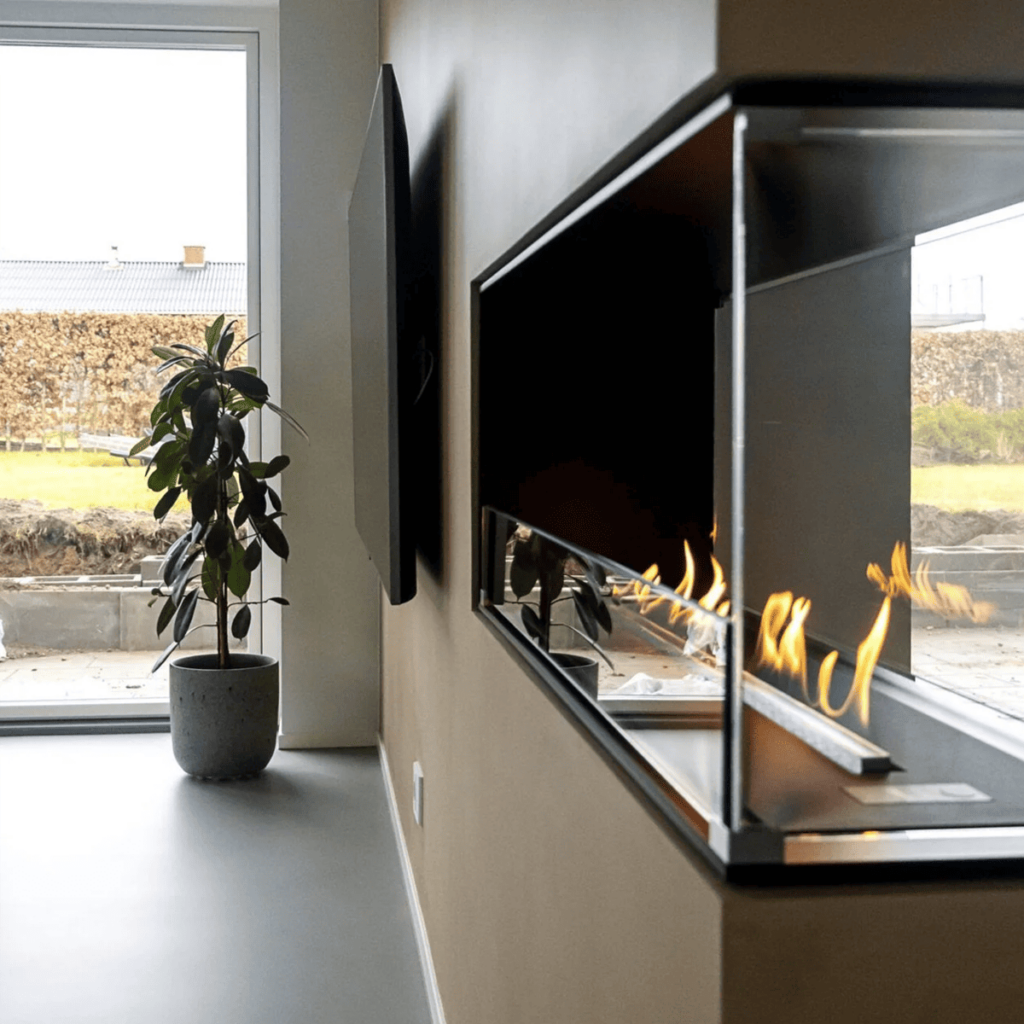
Combustion By-Products and Indoor Air
With clean fuel and good combustion, the main by-products are typically water vapour and carbon dioxide. However, it’s important not to treat that as a guarantee. If combustion is not ideal, other gases can be produced, including carbon monoxide. Factors that can contribute include poor fuel quality, a dirty or damaged burner, and challenging airflow conditions.
That’s why “ventless” needs to be paired with sensible ventilation and responsible run times. If you’re using the fireplace regularly, it’s also worth having working smoke alarms and a carbon monoxide alarm in line with manufacturer advice and local requirements.
Key Takeaways
Bioethanol fireplaces produce real flames by burning vapour from fireplace-grade liquid fuel in a purpose-built burner. The lack of a chimney can make installation easier and open up design options, but it also means you need to take room suitability, ventilation, and disciplined refuelling seriously.