
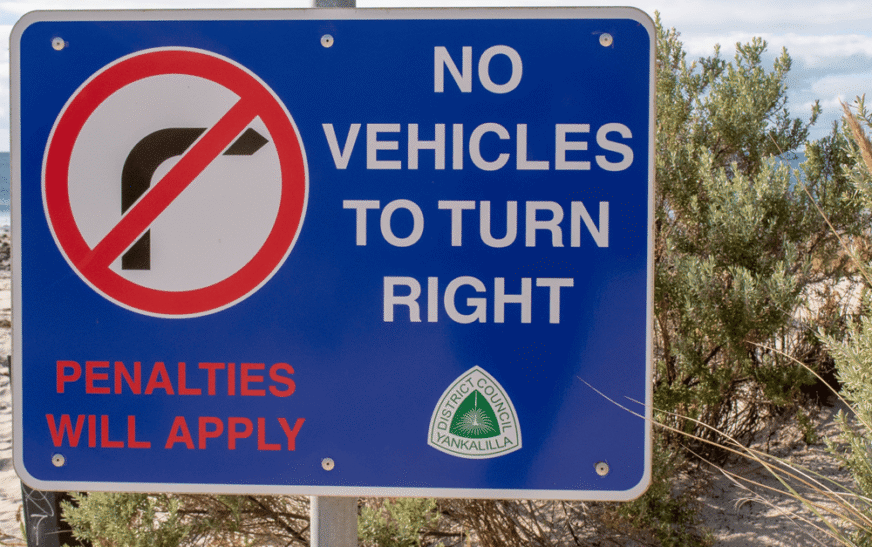
Most operators reckon the real test of a commercial signage supplier happens when delivering civil, industrial, or traffic management assets. A lot of shops only handle retail fit-outs. Those companies quickly fall apart when asked to deliver heavy-duty road signs for remote locations.
Before signing off on a civil project, buyers should understand the basics of reflective sheeting. Reflective sheeting is the retroreflective vinyl film applied to traffic signs that bounces vehicle headlight beams directly back to the driver’s eyes. If a supplier uses the wrong grade, the asset fails safety audits immediately.
Meeting Main Roads and Civil Compliance
Strict civil compliance requires a supplier who understands regional transport regulations, Main Roads guidelines, and specific site safety requirements. A standard printer can’t just guess the layout for a temporary roadworks warning. There are exact specifications for text heights, border widths, and corner radii.
- Safety markers require exact Class 1 retroreflective material to meet state traffic standards.
- Temporary roadwork frames need heavy-duty galvanised steel legs to survive constant throwing into the back of utes.
- Mining operations mandate custom site hoardings built to specific dimensions to control heavy machinery traffic.
- High-risk zones demand three-sixteen grade stainless steel fixings that won’t rust out in coastal salt spray.
Suppliers attempting civil work without knowing these rules cause massive delays. Reputable operators maintain libraries of standard transport authority templates. They know exactly how a speed limit sign must look.
Managing High-Wind Ratings and Engineering
Surviving severe weather events requires an exact structural engineering calculation for the specific wind region of the installation site. Australia is divided into multiple wind classifications that dictate how a sign must be built. A heavy-duty pylon erected in Perth won’t survive a wet season up north.
- Region A ratings cover standard inland areas where standard structural aluminium internal framing is sufficient.
- Region D cyclone ratings apply to severe coastal zones like the Pilbara and Kimberley, requiring deeply engineered concrete footings.
- Dynamic wind loads affect large highway directional boards, needing heavy-duty steel support beams.
A good commercial signage supplier manages these engineering certificates before quoting the job. Leaving the permit paperwork to the client is a massive red flag. Good estimators catch structural issues before cutting any metal.
The Role of Reflective Sheeting Grades
Proper night visibility requires matching the specific grade of retroreflective vinyl to the speed zone and placement of the asset. Standard printed vinyl does almost nothing when a road train approaches at night. Trade insiders specify exactly what film goes onto an aluminium panel.
Class 1 reflective film contains micro-prismatic cells that provide high-intensity light return. Civil contractors use this material exclusively for stop signs, speed signs, and major directional boards. The film starts as a rigid sheet and bonds permanently to the metal.
Cheaper engineer-grade films barely reflect enough light for a private car park. Some retail-focused suppliers try to pass off cheap reflective tapes as road-compliant. This creates a massive liability if an accident occurs on an industrial site.
In-House Fabrication and Equipment
A capable fabrication team handles heavy metal folding, direct-to-substrate printing, and structural welding under one roof to maintain strict quality control. Outsourced manufacturing introduces delays and removes the installer from the actual build process. Trade insiders look for heavy machinery during a factory tour.
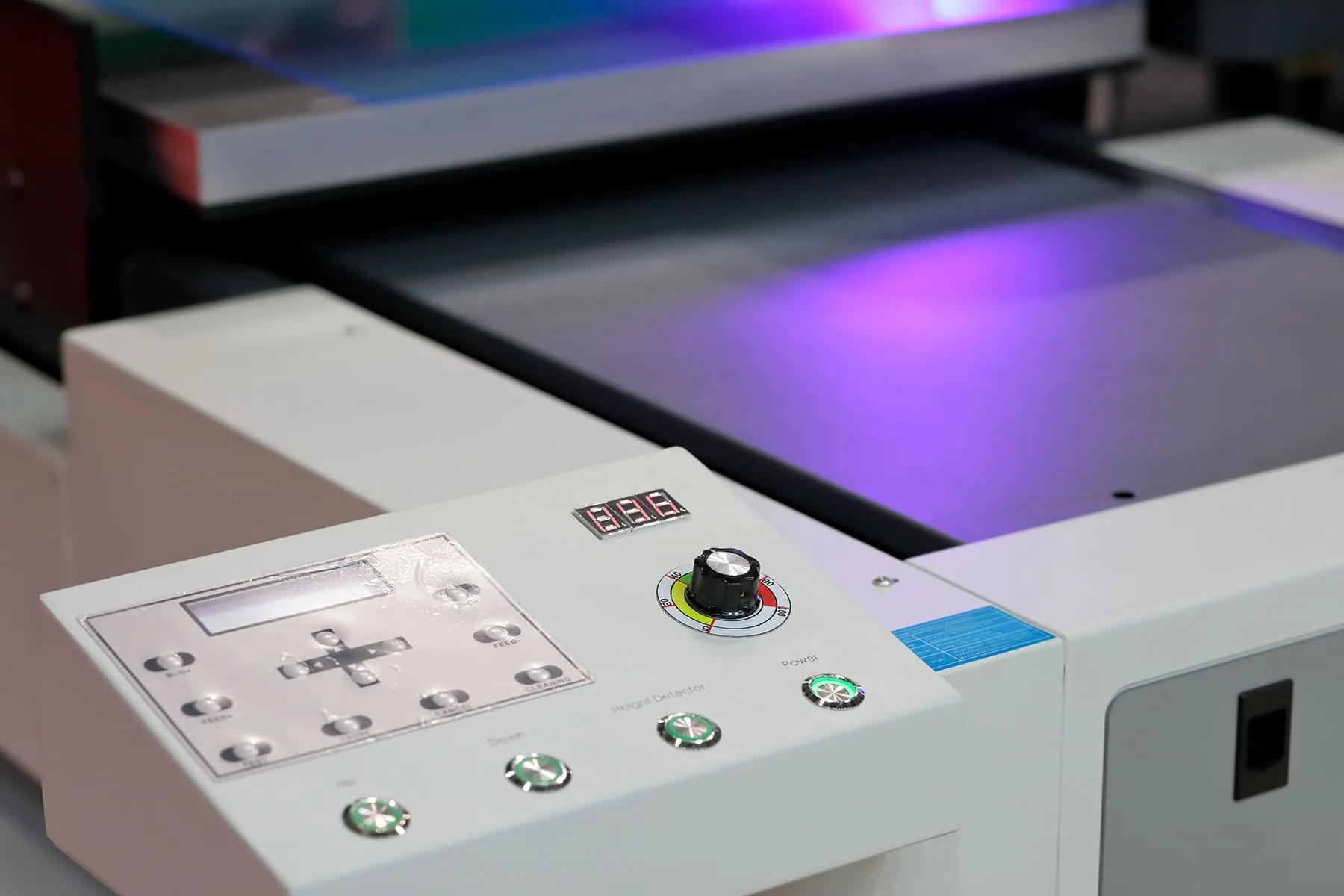
A proper civil setup needs flatbed UV-cured printers, heavy-duty guillotines, and CNC routers. Direct-to-substrate printing involves curing ink directly onto aluminium composite panels using ultraviolet light. This eliminates the need to apply a separate vinyl sticker, preventing peeling in the harsh sun.
Suppliers running everything out of a small garage are usually just marking up wholesale products. Companies controlling their own production timeline aren’t waiting on a shipping container to finish a civil hoarding job. They cut, print, and pack on their own schedule.
Frequently Asked Questions
What Is the Standard Turnaround Time for Civil Signs?
Standard turnaround times range from one to three weeks for typical civil or industrial signage. Complex structural hoardings or massive highway packages take up to six weeks. Permit approvals and engineering certification can push this timeline out significantly.
How Are Traffic Signs Maintained in Regional Areas?
Maintenance focuses on regular washing to remove dirt, red dust, and salt build-up. This cleaning protects the reflective faces and ensures the signage remains highly visible at night. Anti-graffiti coatings allow crews to remove vandalism quickly without replacing the whole panel.
Do Sign Makers Handle Civil Permit Applications?
Established companies employ dedicated staff to manage town planning and transport authority applications. They prepare the required elevation drawings, structural engineering certificates, and site plans. Passing this complex paperwork back to the client indicates a low-tier operator.
Final Thoughts
Sourcing a proper manufacturer for civil and industrial assets is a major operational decision. Looking under the hood of a supplier reveals exactly what a buyer is paying for. The trade requires heavy structural engineering, compliant materials, and high-level logistics. Settling for the cheapest quote usually guarantees a rejected site audit.