
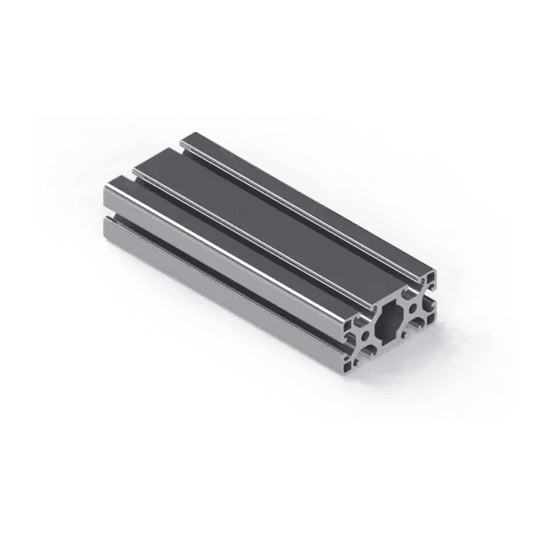
T-slot aluminium extrusion is an aluminium profile with T-shaped channels running along its length. Nuts slide or drop into those channels, so brackets and panels can be fixed at any point along the profile.
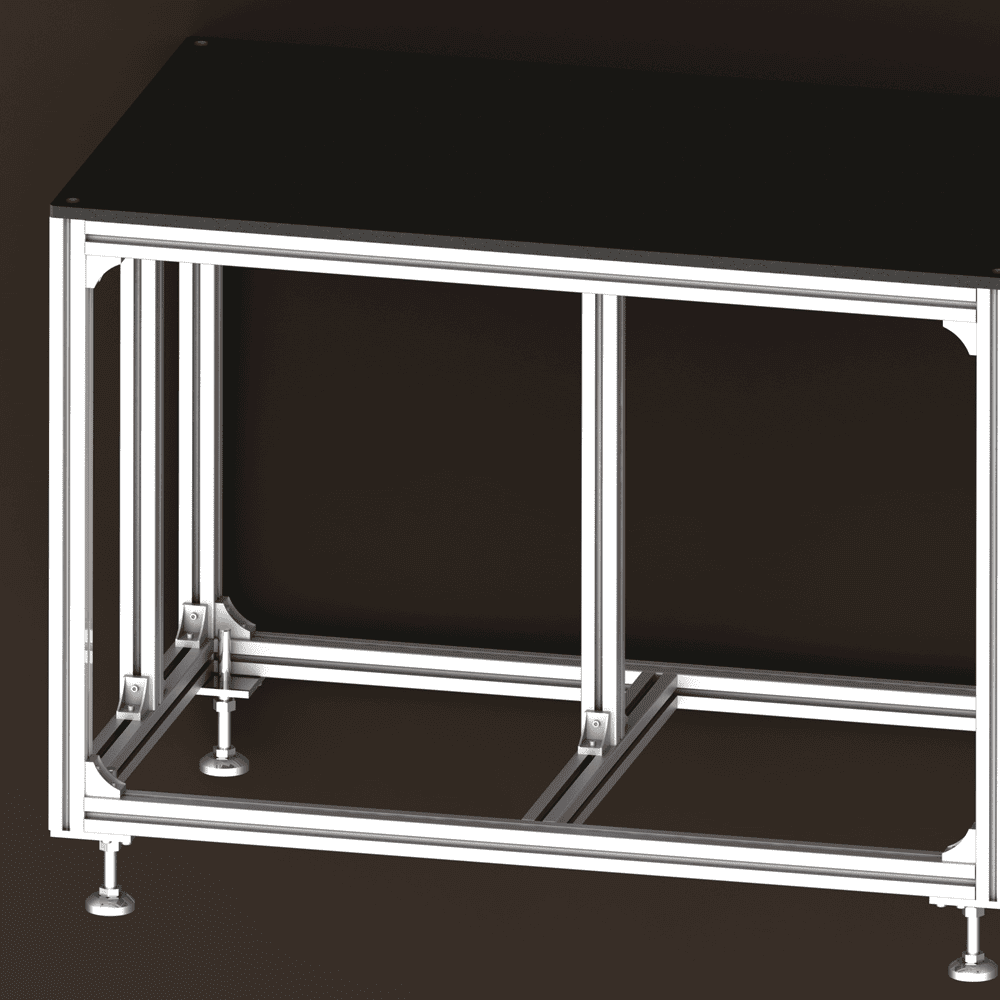
Australian workshops use T-slot aluminium extrusion for a fair bit of framing that used to be welded steel, from machine bases to packing benches. Most joints are bolted, so a frame can be taken apart and rebuilt when a layout changes.
How T-Slot Extrusion Gets Made
T-slot extrusion is made by pushing a heated aluminium billet through a steel die shaped like the profile’s cross-section. The profile comes out as one continuous length, with every slot and internal cavity already formed.
After pressing, production generally follows this sequence:
- the profile’s cooled as it exits the press, then stretched slightly to straighten it
- it’s cut into long mill lengths, often around 6 metres
- the lengths are aged in an oven to reach final temper
- suppliers finish and cut the stock to order, with anodising and powder coating the usual finishes
Alloys from the 6000 series are typical, with 6063 a common choice for T-slot sections. These alloys extrude well, which helps keep fine slot detail consistent along a long run.
Temper describes the heat-treatment condition of an alloy and appears as a letter and number after the alloy code. A T5 profile is cooled from the press and then artificially aged. T6 adds solution heat treatment before ageing, which raises strength, and on extrusions it’s often done by quenching at the press.
A worn die can leave slots slightly tighter or looser than drawing, which can affect how freely hardware slides.
The Anatomy of a T-Slot Profile
A T-slot profile is a hollow section with a central core and slots on its outer faces, joined by thin internal webs. Those features decide how the profile carries load and which hardware it accepts.
The main features worth knowing:
- The centre bore runs the full length. Its ends are often tapped, so a bolt passed through one member can thread into the end of another.
- Slot dimensions and lip shape vary between systems, and sometimes between sizes in the same system.
- Internal cavities keep the weight per metre down, which matters on long members and mobile frames.
- The slot lips carry the clamping load, which makes them vulnerable to damage from overtightening.
Common square sizes include 25x25mm, 40x40mm and 50x50mm, alongside rectangular sections such as 80x40mm. The wider face of a rectangular profile gives more room for mounting hardware.
Material Properties Behind Its Behaviour
Aluminium’s low weight and modest stiffness account for most of how T-slot frames behave. Both figures sit well below those of structural steel.
The properties that matter most:
- an elastic modulus of around 69 GPa, against roughly 200 GPa for structural steel
- a density of about 2.7 tonnes per cubic metre, against roughly 7.85 for steel
- thermal expansion of about 23 micrometres per metre per degree, so a 2m member moves just under 2mm over a 40-degree range
- a thin natural oxide layer that protects the surface, which anodising thickens
The lower stiffness shows up as flex under load, long before the metal gets near its strength limit.
In salty coastal air, steel fasteners touching aluminium can cause galvanic corrosion that eats into the aluminium around the joint. Isolating washers keep the bolt head off the profile face, but the T-nut still sits directly against the aluminium inside the slot. Coated hardware and an anodised profile surface both slow the reaction.
Frequently Asked Questions
Can T-Slot Aluminium Extrusion Be Welded?
T-slot aluminium extrusion can be welded, but welding is rarely used on it. Heat from welding softens the alloy near the joint and reduces the strength gained from its temper. A welded joint also loses the adjustability that modular framing relies on.
Does T-Slot Extrusion Need Drilling or Machining?
T-slot extrusion usually needs little machining beyond cutting profiles to length. End connections often use a tapped centre bore, a simple machining step done at the profile end. Some anchor connectors also need an access hole drilled through the profile wall.
Do T-Slot Profiles from Different Brands Fit Together?
T-slot profiles and fittings from different brands sometimes fit together, though there’s no guarantee. Slot dimensions and lip shape vary between systems, even at the same outside size. A nut that sits loosely in the slot can slip under load.
Key Takeaways
A T-slot frame can only do what its slot system allows. Every nut and connector needs to match that slot for joints to clamp properly.
Aluminium’s weight and stiffness shape how T-slot members behave under load. On coastal sites, contact between steel hardware and aluminium is the corrosion point to watch.