
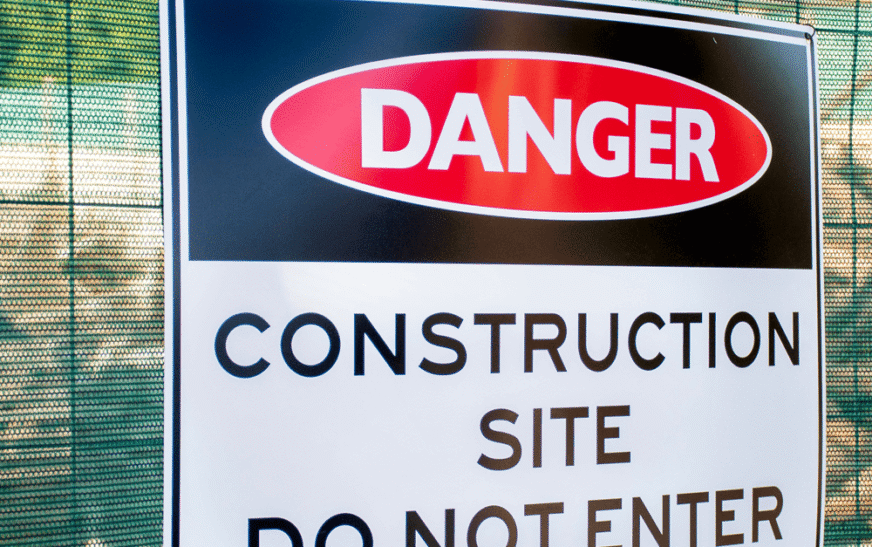
Most WA businesses treat safety signage as a purchasing decision. Someone notices a gap, orders a sign, bolts it up, job done. Safety sign compliance in WA works differently under the Work Health and Safety Act 2020. The sign matters less than the decision behind it, the record of why that sign, in that spot, was the right call.
Most operators don’t spot this distinction until it matters. It usually surfaces when an inspector, or a lawyer after an incident, asks for the paperwork behind the sign rather than the sign itself.
What “WHS Act 2020” Actually Means for a WA Business
The WHS Act 2020 replaced WA’s old Occupational Safety and Health Act 1984. It brought the state into line with the harmonised national model most other jurisdictions have run since 2012. The Act commenced on 31 March 2022, closing out a 38 year run for the old OSH framework.
The Act applies to a PCBU, meaning a person conducting a business or undertaking. It covers everything from a sole trader on a job site to a large head contractor.
The Act itself doesn’t hand out a shopping list of signs to buy. It sets a duty: a PCBU must manage risks to health and safety so far as is reasonably practicable. Signage sits underneath that duty as one control among several, useful alongside proper engineering or procedural fixes rather than in place of them.
Framed this way, signage decisions get made and documented differently. A sign chosen to satisfy a checklist looks very different, on paper, from one chosen because a risk assessment identified a specific gap.
Why Reasonably Practicable Decides How Much Signage Is Enough
“Reasonably practicable” is the test that decides whether a business has done enough. It weighs the likelihood and severity of harm against the cost, difficulty, and availability of a fix. There’s no fixed number of signs that satisfies it. What satisfies it is evidence that someone actually thought about the hazard, weighed the options, and picked a control that fits.
That’s a lower bar in some ways and a higher one in others. A hardware-store warning sign slapped over a genuine engineering fault won’t clear it, no matter how compliant the sign itself looks. A modest, well-placed sign backed by a documented risk assessment often will.
A few things tend to strengthen the reasonably practicable case for signage specifically:
- The sign matches a hazard that’s genuinely present on site, drawn from an actual walkthrough rather than a generic template.
- Someone can point to a short decision trail explaining why that particular sign, and no other control, got picked.
- The signage gets checked against how the site looks today, with the last review date logged somewhere.
Where Officer Due Diligence Turns Signage into a Paper Trail
Officer due diligence turns signage into a paper trail because section 27 puts that duty on named individuals, not the business as a whole. In practice, signage can’t sit entirely with whoever runs the maintenance ledger. Someone senior needs visibility over the decision too.
Section 27 covers six broad areas in total. Signage touches at least two of them directly, understanding the business’s hazards, and checking that controls are actually working.
This is where a lot of WA businesses come unstuck without realising it. The sign itself might be fine. What’s missing is proof that anyone above facilities level ever looked at it.
A hypothetical worth sitting with: a mid-sized manufacturer adds a mezzanine storage deck, and the fall-hazard signage gets updated within a fortnight. Reasonably quick work. But no one records who approved the wording, checked it against AS 1319, or signed off that it matched the new layout.
Eighteen months later, an unrelated incident happens on the same floor. An investigator pulls the file and finds a sign with no paper trail behind it. The sign itself passes a visual check, but that doesn’t carry much weight. The due diligence duty rests on the officer’s process as much as the outcome.
Frequently Asked Questions
Does the WHS Act 2020 List the Exact Signs a Business Must Install?
No, it sets a general duty to manage risk so far as is reasonably practicable, rather than a fixed list. Specific signage triggers, like confined space entry or hazardous chemical storage, sit in the WHS (General) Regulations 2022 instead. Outside those named triggers, the general duty can still require signage depending on the hazard.
Who Is Responsible for Signage Decisions Under the Due Diligence Duty?
Officers carry a personal due diligence duty under section 27, which means signage can’t sit entirely with junior facilities staff without any management oversight. Officers need to show reasonable steps toward understanding site hazards and verifying that controls, including signage, are actually working. Officers don’t need to order every sign personally, but they need visibility over the process.
How Often Should Safety Signage Be Reviewed in WA?
There’s no fixed statutory interval, but signage should get reviewed whenever the site layout, contractor arrangements, or equipment changes. A layout change, a new contractor, or a near miss are the practical moments that should trigger a check. Signage that’s never been checked against the current layout won’t hold up well if an audit or investigation looks closely.
Final Thoughts
Safety sign compliance in WA comes down to the thinking behind the sign more than its colour match to AS 1319. A business needs to show that thinking, from the risk assessment through to who last checked the sign still fits the site. The WHS Act 2020 sets the duty, and the General Regulations name the specific triggers. The due diligence obligation on officers turns signage from a maintenance task into a management one.