

Most lawn problems that show up in autumn don’t actually start in autumn. They start in late summer, when the season is clearly winding down but the irrigation timer is still running like it’s the middle of January. The lawn looks fine for a while, and then it doesn’t, and the reason is rarely obvious at first glance.
Good Australian lawn care during this transition period isn’t complicated, but it does require understanding what has actually changed and why the current routine no longer fits.
Why Autumn Rewrites the Rules for Your Lawn
The shift from summer to autumn is easy to underestimate because the temperature drop is gradual. One week it’s still hot, the next it’s cooler but not cold. The lawn looks green, the soil still dries out after a few days, and the temptation is to leave the timer alone and see how it goes.
But several things change at once during this transition, and each one affects how water moves through your lawn system:
- Evaporation drops significantly. In peak summer, water applied to the surface can be gone within hours. In early autumn, the same amount of water may sit in the top few centimetres for a full day or more.
- Nights get cooler and dew becomes more common. Grass blades that were dry by mid-morning in summer can now stay damp well into the following morning, extending leaf wetness and increasing the risk of fungal disease.
- Turf growth slows noticeably. Warm-season grasses like buffalo, couch, and kikuyu push hard through summer and then ease off as daylight shortens and soil temperatures drop. A slower-growing plant uses less water, but if supply stays the same, the root zone stays wet longer than it should.
- Rainfall becomes less predictable but more frequent. Even light autumn rain can add meaningful moisture that doesn’t register as “watering” but still soaks into the profile.
Together, these factors mean a schedule tuned for January conditions is almost always too much by mid-autumn, and in many parts of the country, too much from early March onwards.
The Invisible Damage of Staying on Summer Settings
The harm from overwatering in autumn doesn’t always look like overwatering, which is exactly why it catches people out year after year. The most common warning signs include:
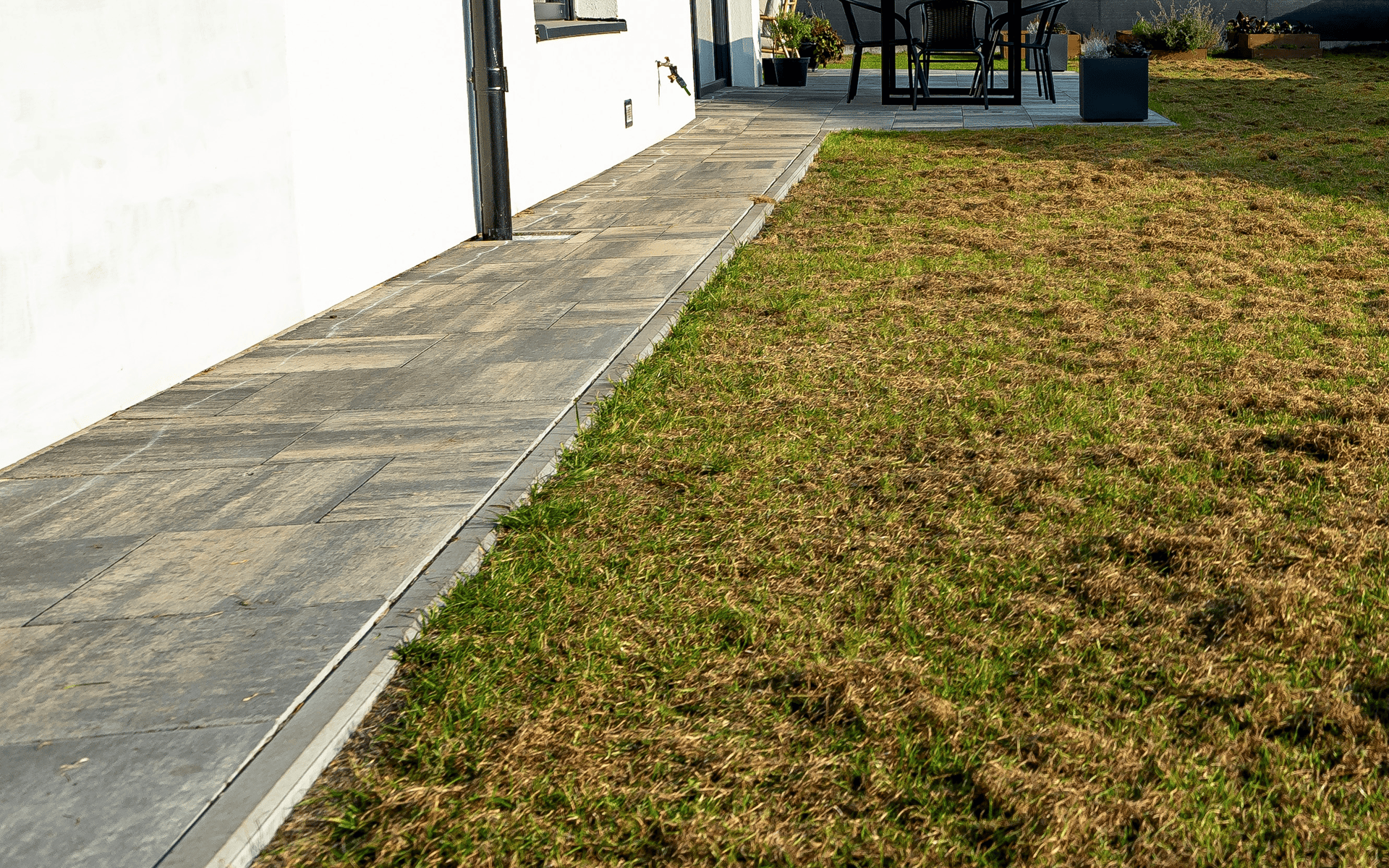
- Yellowing turf that gets misread as heat or drought stress and gets more water added, making the underlying problem worse.
- Soft, spongy patches underfoot, especially in the morning after an irrigation cycle, pointing to saturation that’s pushing oxygen out of the root zone.
- Moss and algae appearing on paths or shaded lawn edges before the turf itself starts looking visibly sick, a reliable early indicator of excess moisture sitting around too long.
- Fungal patches or unusual discolouration that seem to appear out of nowhere after a few cooler, overcast days in a row.
Yellowing in particular is easy to misread. When grass yellows in the middle of summer, the instinct is to blame heat stress or drought and add more water. In autumn, that same yellowing is more likely a sign of waterlogged roots, compaction, or fungal pressure, and adding more water makes all three significantly worse.
For anyone taking Australian lawn care seriously, recognising these early signals and connecting them to irrigation habits is one of the most practical skills to develop.
The Timer Doesn’t Know What the Lawn Needs
Irrigation timers are genuinely useful, but they have one significant limitation: they run on schedule, not on demand. They don’t know that it rained overnight, that the last few days were cloudy and cool, or that a patch near the fence has been holding moisture since last week.
The practical approach is to treat the timer as a starting point, not a set-and-forget solution. A few habits that take five minutes or less and make a real difference:
- Check the soil manually at least once a week by pushing a screwdriver or finger 5 to 10 cm into the root zone.
- If the soil is still damp when the next cycle is due, skip it entirely rather than running at a reduced time.
- After any rainfall, delay the next scheduled watering and reassess soil moisture before resuming.
- Note which zones dried fastest and which held moisture longest, then start making zone-specific adjustments from there.

Key Takeaways
The summer watering schedule stops working in autumn because the conditions it was designed for no longer exist. Lower evaporation, cooler nights, slower turf growth, and occasional rainfall all change how long moisture sits in the soil and on the leaf.
The practical shifts that make the biggest difference:
- Reduce watering frequency before reducing depth, and always prioritise deep, infrequent sessions over short, regular ones.
- Check soil moisture manually at least once a week rather than relying on the timer to make the call.
- Treat shaded, clay-heavy, and thatch-prone zones differently from open, sandy, or sun-exposed areas.
- Watch for early warning signs (spongy patches, yellowing, moss) rather than waiting for obvious visible decline.
- Use a cycle-and-soak approach if runoff starts before the root zone is adequately watered.
Consistent, attentive Australian lawn care through the summer-to-autumn transition gives turf the best possible foundation going into winter. The lawns that arrive at spring looking healthy and even are almost always the ones that were managed carefully in the months leading up to it.