

Most people treat lawn watering as something you do on autopilot. Sprinklers go on the same days, for the same time, until a bill arrives or water restrictions change. The problem is that this guesswork often wastes water and still leaves the grass stressed.
A water budget flips that around. Instead of reacting, you decide up front how much water you can give the lawn, then build your routine around that limit. Done properly, it keeps your turf alive and healthy while respecting both your wallet and the environment.
It is a practical way to make Australian lawn care more sustainable without giving up on having a lawn you actually enjoy.
What a Lawn Water Budget Actually Is
A water budget sounds technical, but at lawn level it is just a straightforward plan. It answers four questions:
- How much water can I realistically allocate to the lawn each week or month?
- How many minutes of irrigation does that equal on my current system?
- How should those minutes be spread across the week and seasons?
- What can I change in the soil and hardware so each minute does more work?
You can keep it as simple as a note on the fridge or a quick spreadsheet. The important thing is that you stop guessing and start working within a clear, self-imposed limit.

Step 1: Understand What Your Lawn Really Needs
Before setting a budget, it helps to understand what your turf needs to stay healthy, not perfect. Lawns do not need to look like a golf course every day of the year to be considered successful.
You do not have to get it perfect. A reasonable estimate is enough to start. As your new routine runs for a few weeks, you can adjust based on how the lawn responds.
Step 2: Decide How Much Water You Can Afford to Use
Next, you choose the limit. This is where sustainability and budget come together.
You might base it on:
- Your typical water bill and what you are comfortable spending
- Local guidelines or restrictions in your area
- A personal decision about how important the lawn is compared to other water uses
Once you have a weekly or monthly volume in mind, convert it into irrigation time. A simple way is to:
- Place a few flat containers on the lawn
- Run your sprinklers for a set period, such as 10 or 15 minutes
- Measure the average water depth in the containers
From this, you can estimate how many minutes it takes to apply a certain depth of water. That lets you translate your volume limit into actual run times you can program into a controller or follow with a hose.
Step 3: Turn Your Water Budget into a Weekly Plan
A budget only helps if it translates into clear actions. The next step is to spread your total minutes across the week in a way that supports healthy growth and strong roots.
A sustainable pattern usually means:
- fewer, deeper watering sessions rather than daily light sprinkles
- water reaching at least 150 to 200 millimetres deep into the root zone
- watering early in the morning, when less is lost to evaporation and wind
For example, if you work out that you can afford 60 minutes a week on a zone, you might:
- run two 30-minute sessions on non-consecutive mornings, or
- run three 20-minute sessions if your soil is very free draining
On slopes or heavier soils, you can use a “cycle and soak” approach. This means breaking a long runtime into two or three shorter bursts with rest periods between them, so water can soak in instead of running off.
Step 4: Use Soil Improvements to Stretch Your Budget
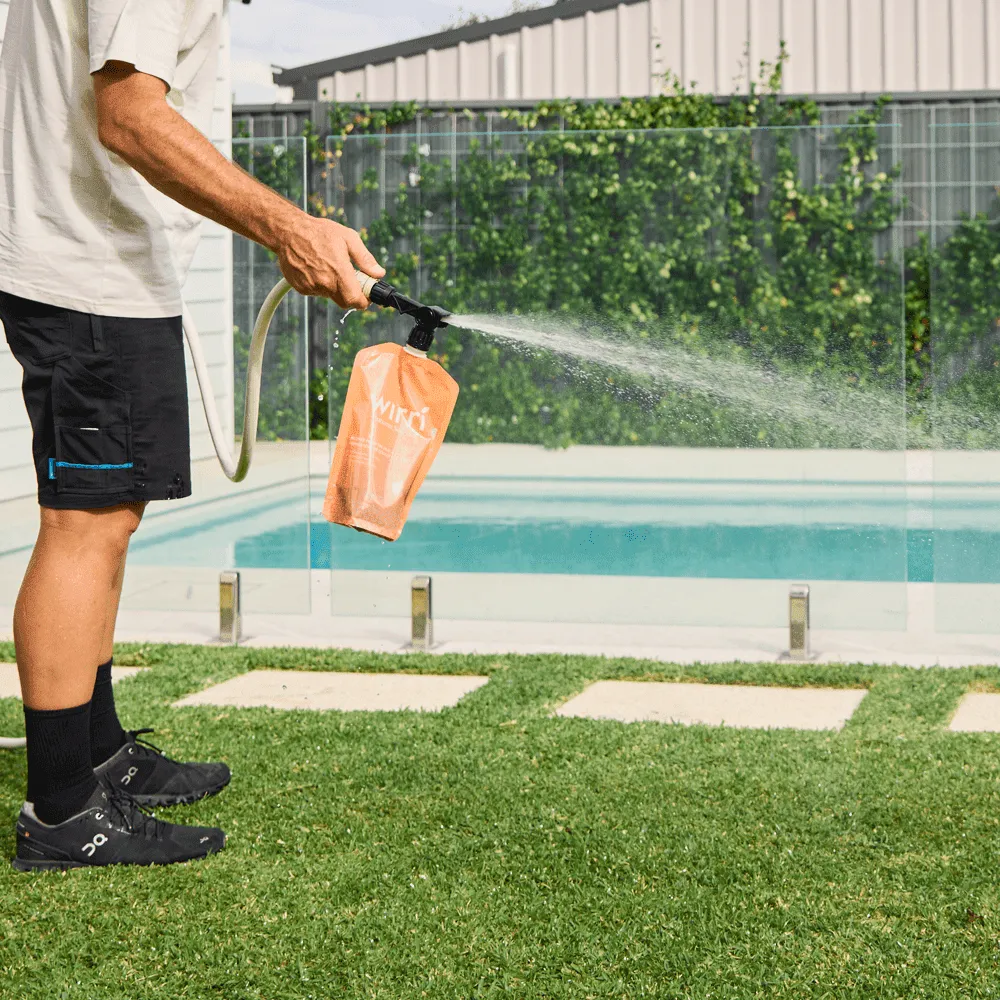
The biggest lever in your water budget is not your irrigation controller. It is the soil. Healthy soil can keep roots comfortable for longer between watering cycles, which makes your budget feel more generous without actually using more water.
When you invest in soil, every minute of watering does more work. That is a core principle of sustainable Australian lawn care. You are building a system that naturally uses less water to stay healthy.
Step 5: Tune Your Irrigation Hardware
Even a good budget can be undone by a wasteful or poorly set up irrigation system. A quick tune-up can deliver big savings and more consistent results.
After tuning, your set minutes will translate into more useful water in the root zone, not lost in overspray or puddles.
Step 6: Build Water-Smart Habits
A water budget works best alongside simple day to day habits that avoid unnecessary watering. The idea is not only to respect the budget but also to lean on other parts of lawn care to support it.
These habits cost nothing and often save as much water as hardware changes.
Make Every Litre Count
A green lawn without a plan is expensive and fragile. A healthy lawn supported by a clear water budget is predictable, efficient and much easier to live with.
By deciding how much water you can afford to use, translating that into minutes, and matching those minutes with deeper, less frequent watering, you give your turf what it needs instead of just what is convenient. Soil improvements, hardware tuning and better habits all stretch that budget further, so every litre does more work in the root zone.