
Running a commercial building without a Direct Digital Control (DDC) system for ventilation is a bit like driving without a speedo. Everything might feel fine until something’s quietly off. DDC systems are the backbone of modern building automation. They monitor real conditions inside a space and adjust mechanical systems accordingly, without anyone having to intervene manually.
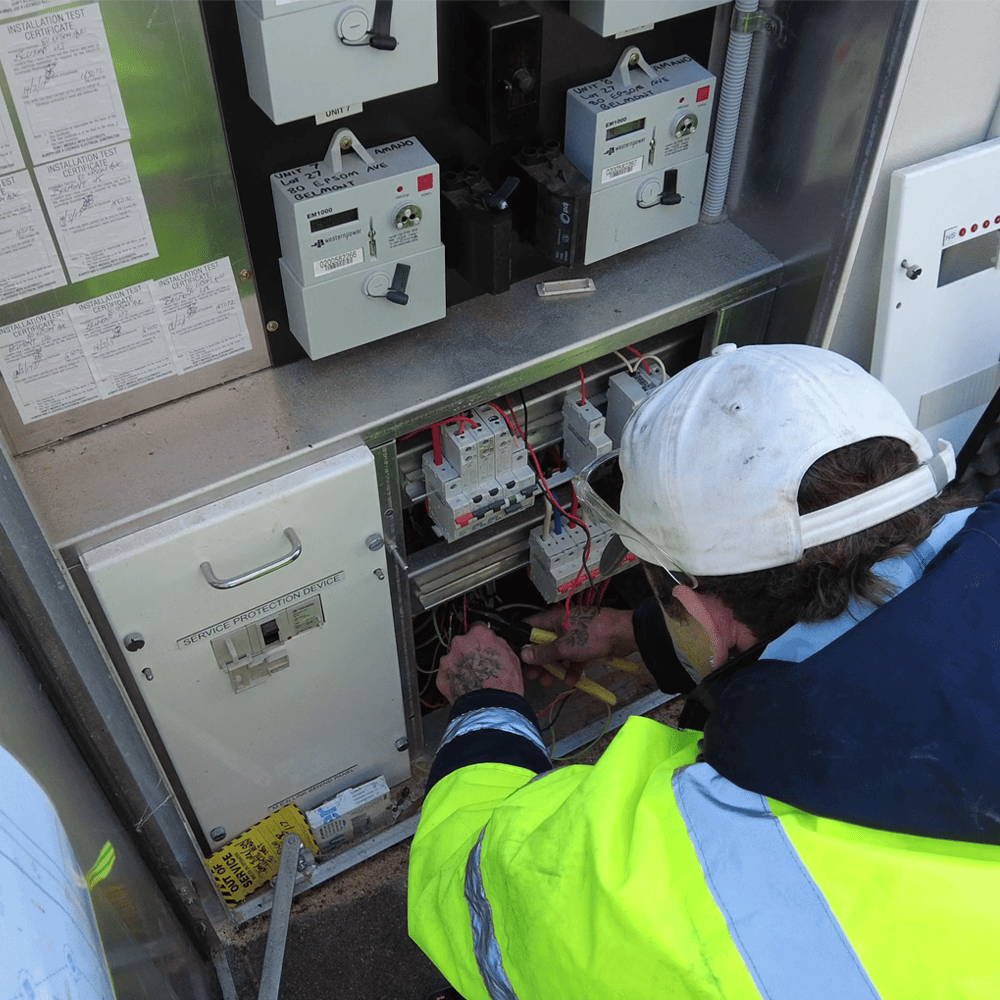
Most operators running older or simpler control setups don’t fully appreciate what they’re giving up. Mechanical electrical and controls wiring tied into a proper DDC system can shift a building from reactive management to something genuinely intelligent.
What a DDC Control System Actually Does
A DDC system is a building automation controller that reads sensor inputs and adjusts mechanical outputs in real time. That’s the short version. In practice, it means the system can track CO2 levels, temperature, humidity, and occupancy. From there, it makes decisions about fan speed, damper positions, and airflow rates without manual input.
That distinction matters more than most people give it credit for. An older on/off timer-based setup can’t account for a room filling up faster than expected or an unusually warm day driving up demand. A DDC system can. It responds to what’s actually happening inside the building, not a fixed schedule.
Key functions a DDC system typically handles:
- Reading CO2 concentration levels and adjusting fresh air supply accordingly
- Economy cycle logic, which uses outdoor air when conditions allow to reduce mechanical cooling load
- Fan speed modulation based on demand rather than fixed schedules
- Fault detection and alert generation when readings fall outside normal parameters
- Data logging for energy audits and compliance reporting
Why Economy Cycle Logic Changes the Energy Picture
Economy cycle control is one of the more underappreciated features built into DDC systems. It works by comparing outdoor air conditions with indoor conditions. When outside air is cooler and drier, the system draws it in directly instead of running mechanical cooling. The result is less load on the refrigerant circuit and lower energy consumption during those windows.
The compounding effect is real:
- Economy cycle can reduce mechanical cooling runtime by 15 to 40 percent in suitable climates, depending on building type and occupancy patterns
- Reduced compressor cycling extends equipment life and cuts maintenance costs over time
- NCC Section J compliance increasingly favours demand-controlled ventilation, and DDC systems make that easier to demonstrate
Buildings in Western Australia’s climate get a proper crack at economy cycle savings during shoulder seasons. Mornings and evenings when conditions are favourable are consistently missed on sites without DDC integration. The controls either aren’t sophisticated enough to make the call, or nobody’s manually adjusting settings to take advantage of available conditions.
CO2 Control and Why It’s Not Just About Air Quality
CO2-based demand control ventilation is the method of adjusting fresh air supply based on measured carbon dioxide concentrations inside a space. It’s worth defining clearly because it’s sometimes framed purely as an occupant health measure, when the energy implications are just as significant.
Most of the ventilation waste in commercial buildings happens when spaces run at full fresh air rates regardless of actual occupancy. A meeting room with two people in it doesn’t need the same airflow as a packed boardroom. Without CO2 sensors feeding into the controls, the system can’t tell the difference. It runs at design capacity and burns energy for it.
Mechanical electrical and controls wiring that integrates CO2 sensors into the DDC system gives the controls enough information to act on. The fans modulate. The fresh air dampers adjust. The system finds a balance between acceptable air quality and not running the ventilation plant harder than needed.
What good CO2 control looks like in practice:
- Setpoints typically targeting 800 to 1000 ppm inside occupied spaces, with 400 ppm being baseline outdoor air
- Staged damper and fan responses rather than binary open/closed switching
- Override logic for high-occupancy events or after-hours use cases
- Integration with BMS or fire mode logic to maintain safe operation across all conditions
Frequently Asked Questions
What’s the Difference Between a DDC System and a Standard BMS?
A Building Management System (BMS) is the broader platform that can oversee multiple building systems including HVAC, lighting, access, and fire. A DDC system is specifically the controller layer that reads sensor inputs and drives mechanical outputs. In most setups, DDC controllers are the field-level devices that feed data up to the BMS.
How Often Do DDC Systems Need Recalibrating or Updating?
Sensor calibration checks are typically recommended annually, particularly for CO2 and temperature sensors that drift over time. Logic updates depend on how the building’s use changes. If occupancy patterns shift significantly, setpoints and schedules should be reviewed to keep the system performing as intended.
Is CO2 Control Required Under the National Construction Code?
The NCC’s Section J requirements for commercial buildings include demand-controlled ventilation provisions, particularly for spaces with variable occupancy. Whether CO2-based control is mandatory depends on the building class and the specific performance pathway being used. A licensed mechanical engineer or building services consultant can confirm what applies to a given project.
Final Thoughts
DDC control systems aren’t new technology. Plenty of commercial buildings are still running without them, or with poorly commissioned versions that aren’t delivering what they should. The gap shows up in energy consumption, occupant comfort, and the workload carried by whoever’s managing the building.
Getting the logic commissioned properly gives a building the tools to respond to real conditions. Rather than ticking through a fixed schedule, the system adjusts to what’s actually happening inside. That’s a straightforward improvement that holds its value for the life of the installation.