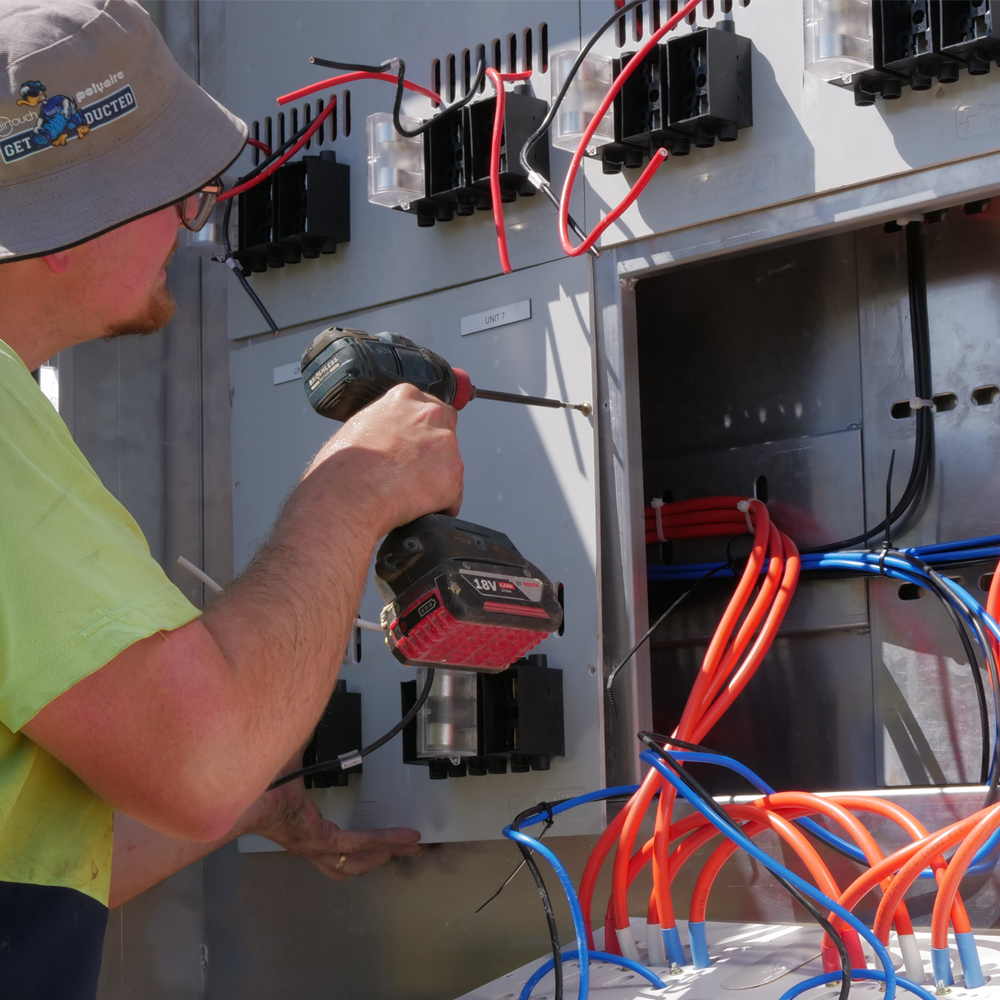

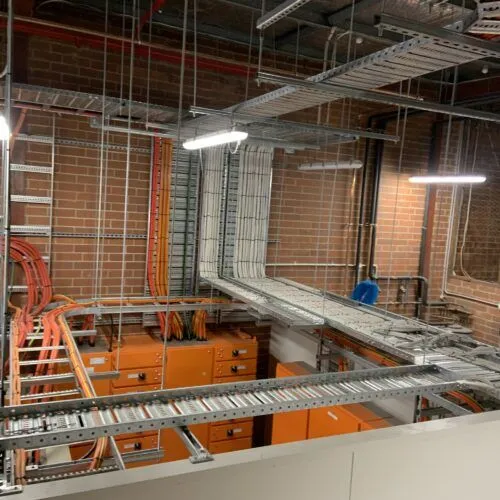
Short answer: yes, many stores can trade through a switchboard replacement. Longer answer: it should only be attempted under a professional, engineered plan with strict safety controls and temporary power solutions. A switchboard refresh touches the heart of a store’s electrical system. That makes it feasible but never casual.
The Real Question: Feasible Or Foolhardy
The deciding factor is not whether tools and parts exist. It is whether the site’s risks, loads, and access can be managed to a professional standard. A competent contractor will start with a formal risk assessment and a load audit, then propose a staged program that keeps essential services live. If a contractor cannot show you that plan up front, the practical answer is no.
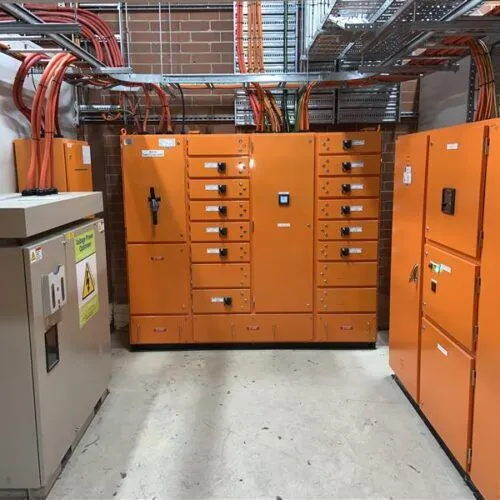
What A Professional Staged Program Looks Like
Trading through a switchboard refresh relies on a deliberate sequence that protects life, stock, and uptime. Professionals follow a rhythm you can recognise.
- Pre-works survey and design. Single line diagrams are verified, fault levels and protection are calculated, and new boards are built offsite to reduce onsite time.
- Enable works. Temporary power is installed, changeover points are proven, and bypass arrangements are tested with real load.
- Sectional cutovers. Circuits move in planned groups with labelling, lockout, and verification at each step.
- Final cutover. Mains and protection settings are commissioned during a short outage, usually overnight, with a rollback plan ready.
- Handover and aftercare. Test packs, updated drawings, and maintenance instructions are delivered, with a post-commission review booked.
If your contractor’s program cannot be explained in this level of detail, trading through is not advisable.
Non-Negotiables for Staying Open
Some conditions must be met before anyone talks about keeping doors open. Professionals will insist on these minimums.
- Clear separation of essential and non-essential loads
- Temporary power sized for refrigeration, point of sale, IT and comms
- Physical exclusion zones, barriers, and signage to protect the public
- Lockout tagout on isolated sections with a single control authority
- Emergency lighting and fire systems maintained or temporarily supported
- Daily coordination with store management and centre security
Meeting these controls is what turns a theoretical yes into a practical, safe yes.
Where Trading Through Works Best
Certain store environments lend themselves to a staged approach. Professionals use these site strengths to your advantage.
- Distinct switchboard sections that can be isolated one at a time
- Documented circuits with accurate labelling and recent drawings
- Plant rooms with enough space for a temporary bypass board
- Roof or yard access for a generator set and safe fuel management
- Predictable trading patterns that allow short night outages
When these factors are present, the likelihood of trading through rises sharply.
When A Short Closure Is the Safer Call
There are limits. A seasoned commercial electrician will tell you when to plan a controlled shutdown instead of forcing a live-trade program.
- Severely degraded boards with heat damage or water ingress
- Unknown or borrowed neutrals that make isolation unsafe
- Congested switchrooms that cannot accommodate temporary gear
- Fire system interfaces that cannot be maintained during a cutover window
- Tenancies with medical cold chain or mission critical loads without redundancy
Professional judgement here protects people, stock, and brand reputation. A planned one-night closure is better than an uncontrolled outage during peak hours.
Temporary Power: Generator, Bypass, Or Both
Keeping the store alive depends on the right continuity method. Professionals will select and size these options with calculations, not guesses.
- Generator supply. A mobile set with compliant changeover gear supports whole-of-store or essential-only loads. Load banks should be used to prove capacity before connection, and noise, exhaust, and refuelling plans must be documented.
- Bypass switchboard. A temporary board is installed to run priority circuits while the main board is rebuilt. Correct IP rating, RCD protection, and neat cable management are essential.
- Section-by-section cutover. If the existing board is well segregated, sections can be replaced in sequence while the remainder stays live.
Often a hybrid plan is ideal. For example, generator for refrigeration and IT, bypass for emergency services, sectional cutover for lighting and back-of-house.
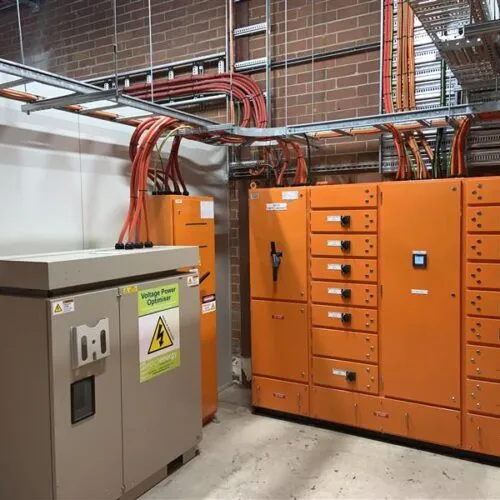
Protecting The Cold Chain and Payments
From a store manager’s perspective, two things cannot fail: refrigeration and payments. Professionals treat these as discrete projects within the project.
- Refrigeration continuity. Racks, display cases, and freezer rooms are prioritised on temporary supply with dedicated protection. Temperature is monitored before, during, and after cutovers, with defrost schedules coordinated to avoid warm pickups.
- IT and point of sale. Network cabinets, EFTPOS, and tills sit behind UPS units that are themselves backed by generator or bypass supply. End-to-end tests verify scanners, printers, and WAN links after every stage.
This is why a switchboard refresh is never just a board swap. It is a controlled operational exercise.
So, Can It Be Done Without Closing
Yes, many supermarkets and large-format retailers can keep trading during a switchboard replacement. The catch is that it must be a professionally managed project with engineered temporary power, strict safety controls, and disciplined staging.
A skilled contractor will tell you upfront if your site is a good fit for a live-trade program or if a short, planned closure is the responsible choice. Either way, the goal is the same: a safer, future-ready installation with minimal impact on customers and stock.