


Summer can leave a lawn looking decent from the street while the turf underneath is running low on energy. Heat, hard sun, patchy rainfall, foot traffic, and inconsistent watering all add up. That is why Australian lawn care tends to treat autumn as more than a clean-up season.
It is the point where you can rebuild the lawn before winter slows growth right down. A good autumn fertilising plan does more than improve colour for a week or two. Done properly, it helps the lawn recover from summer stress, strengthen roots, and head into the cooler months in better shape.
What Summer Usually Leaves Behind
By the time autumn rolls around, many lawns are carrying more wear than people realise. Some of the damage is easy to spot, while other issues show up later when the grass stops bouncing back as quickly as it should.
Common signs include thinning patches, a faded green tone, slower recovery after mowing, and dry spots that seem to repel water instead of soaking it in. Certain lawns also start needing more water just to hold their colour, which is often a sign that the soil is not storing moisture and nutrients as well as it should.
Why Autumn Fertilising Matters More Than It Gets Credit For
Autumn sits in a sweet spot for lawn recovery. Soil temperatures are usually still warm enough for root activity, while cooler air reduces the stress that comes with summer heat. That makes it easier for the lawn to take up nutrients and use them for genuine repair.
This is where autumn fertilising pulls more weight. Instead of forcing aggressive soft growth, the right feed supports steadier recovery. Roots get a better chance to develop. The plant can rebuild energy reserves. Leaf strength improves. Moisture use can become more efficient when soil health is also supported alongside feeding.

What Fertiliser Is Really Doing in Autumn
People often talk about fertiliser as though it only exists to green up the lawn. Autumn is a good reminder that there is more going on than appearance.
At this time of year, fertiliser can help with several jobs at once:
- Replacing nutrients that summer growth and watering have depleted
- Supporting root development while the lawn is still active
- Helping the plant handle seasonal change with more resilience
- Improving overall turf density before winter
- Backing up recovery in worn or stressed areas
A balanced autumn approach can also include soil-focused inputs rather than relying on one quick-hit product. When the soil holds moisture better and nutrients are easier for the lawn to access, the whole feeding program tends to work harder.
The Nutrients Worth Paying Attention To
Autumn is not the season for blindly chasing the highest nitrogen number on the shelf. Nitrogen still matters, but the job changes a bit after summer. You want enough to support healthy growth and colour, but not so much that you push lush, soft growth at the wrong time.
Potassium deserves extra attention in autumn because it supports plant strength and stress resistance. A lawn that has been hammered by heat usually benefits from that shift. Iron and trace elements can also help improve colour without relying only on a heavy nitrogen push. Soil conditioners and humic-style inputs can be useful too, especially where the lawn has become dry, tired, or difficult to wet evenly.
That is one reason seasonal autumn programs often combine more than one product. A soil support product, a liquid green-up, and a granular fertiliser can each do different work. Together, they usually deliver a better result than expecting one product to fix everything.
Why Recovery Beats a Quick Green-Up
A lawn can look greener very quickly after feeding, but that does not always mean it is in better condition. Fast colour can be satisfying, though it is not the same thing as proper recovery.
Autumn feeding works best when the focus is on longer-term improvement. That means supporting the root zone, topping up nutrients steadily, and helping the lawn regain strength after summer stress. A lawn that recovers well in autumn is usually more stable through winter and easier to bring forward in spring.
Cosmetic improvement still matters, of course. Most people want the lawn to look better after they put time and money into it. The key is making sure appearance is the result of improved health, not just a short-lived reaction. That is where a measured autumn program usually wins.
How to Get Better Results from the Application Itself
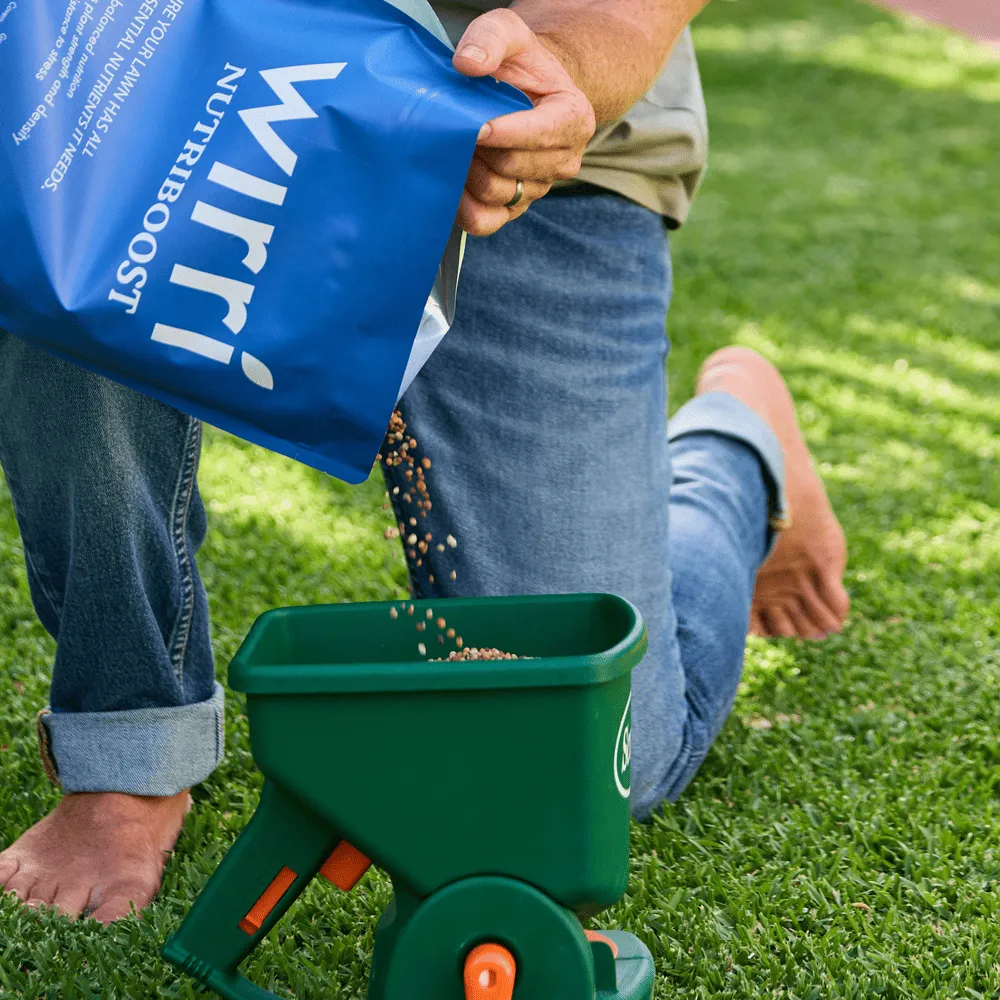
Application mistakes waste a lot of otherwise good lawn products. Uneven spreading, guessing the lawn size, applying to stressed turf, or forgetting to water granular products in can all cut down the result.
A few habits go a long way:
- Measure the lawn area instead of estimating
- Apply granular fertiliser as evenly as possible
- Water it in properly so nutrients move into the root zone
- Spray liquid products at a steady pace with light overlap
- Avoid feeding when the lawn is bone dry and heavily stressed
- Mow before application if the lawn is due, so coverage is more even
Good Australian lawn care usually comes down to getting the basics right at the right time. Autumn is a great season for that because every smart decision tends to carry forward.
Final Thoughts
Autumn fertilising earns its value because it lines up with what the lawn actually needs after summer. The turf is tired, the soil may be running low, and the weather is finally easing enough for recovery work to land properly. Feeding at this point is not just about getting the lawn greener. It is about rebuilding strength, supporting roots, and helping the whole system head into winter in better condition.